
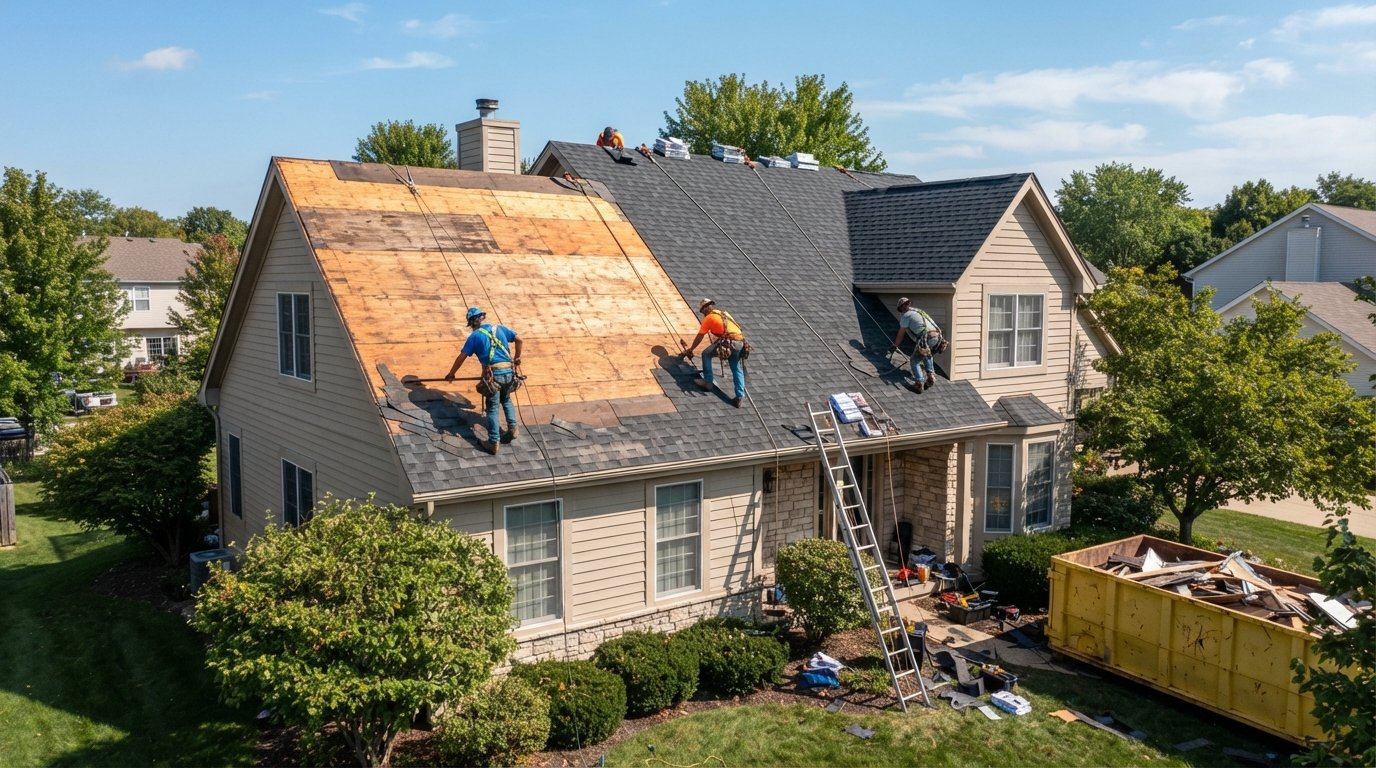
How Long Does a Roof Replacement Take for an Average House?
How long does a roof replacement take for an average house? Most jobs finish in 1-3 days. Call (833)-700-4293 for a free local quote.

By Julia Dawson
Learn more about Roof Repair or Maintenance for guides, costs, and what to expect.
Compare Roof Repair or Maintenance Pros Near You

Enter your ZIP code to compare top-rated local professionals and request free quotes.
Your roof is one of the few home systems that protects everything beneath it, so when it starts failing, the timeline for replacement becomes an urgent question. Homeowners often ask: how long does a roof replacement take for an average house? The short answer is that most standard asphalt shingle roofs on a single-family home are completed in one to three days, but that range expands quickly when you factor in roof size, pitch, material choice, weather, and the condition of the existing structure. Understanding the variables behind that timeline helps you plan realistically, prepare your home, and avoid surprise disruptions.
This guide breaks down the typical schedule by roof size, pitch, and material, explains how weather delays are built into contracts, compares tear-off versus overlay timelines, and outlines what you should do before the crew arrives. By the end, you will have a clear picture of what to expect and how to keep your project on track. If you prefer to compare local professionals early, you can request free quotes through FreeQuotes.Contractors to get a head start on scheduling.
Typical Roof Replacement Duration by Size, Pitch, and Material
The average American house has a roof area between 1,500 and 3,000 square feet, and most contractors measure workload in "squares" (one square equals 100 square feet). A typical 2,000-square-foot home with a moderately pitched gable roof and asphalt shingles usually takes one to two days for the installation itself, plus a day for tear-off and cleanup. That means the total project window is often two to three days, assuming favorable weather and no structural surprises.
Roof size is the most direct driver of time. A small ranch home with a simple gable and a 1,200-square-foot roof might be finished in a single long day by an efficient crew, while a 3,500-square-foot roof with multiple valleys, dormers, and chimneys can stretch to four or five days. Pitch matters just as much: steep roofs require fall protection, slower movement, and additional staging, which can add 20 to 40 percent to labor time. Low-slope roofs may need different materials and drying times, which also affect the schedule.
Material choice creates the widest variation. Here is a practical comparison of common roofing materials and their typical installation timelines for an average house:
- Asphalt shingles: 1 to 2 days for installation; the most common and fastest option for standard homes.
- Metal roofing (standing seam or corrugated): 2 to 4 days; panels require precise measuring and fastening, and some systems need custom fabrication lead time.
- Tile (clay or concrete): 3 to 6 days; heavy materials require structural verification and slower, careful placement.
- Wood shakes or shingles: 2 to 4 days; installation is labor-intensive and may require specialized fasteners.
- Flat or low-slope systems (TPO, EPDM, modified bitumen): 1 to 3 days; seams and curing times can extend the schedule.
Beyond the material itself, the complexity of the roof geometry adds time. A simple gable roof with two planes is fast; a hip roof with four planes, multiple valleys, skylights, and chimney flashing takes longer because each penetration must be flashed and sealed correctly. Contractors often estimate labor based on the number of "roof planes" and penetrations rather than square footage alone, so a smaller but complex roof can take as long as a larger simple one.
Weather Delays and How Contractors Build Them into Schedules
Weather is the wild card in every roofing project. Asphalt shingles should not be installed in temperatures below 40 degrees Fahrenheit without special handling, and rain or high winds can halt work immediately because open roof decks are vulnerable to water intrusion. Most contractors build a weather buffer into their schedules, especially in regions with frequent spring storms or winter freezes. A crew that promises a two-day job in April may plan for a three-day window to account for a rain delay.
Contractors typically manage weather risk in three ways: scheduling around seasonal patterns, staging materials to avoid waste, and communicating a "weather day" policy in the contract. In practice, this means your project may be booked for a Monday start with the understanding that a Tuesday rain shower pushes completion to Wednesday. Reputable contractors will not leave an open roof exposed overnight without temporary underlayment or tarping, and they will often prioritize tear-off and dry-in on the first day so the home is protected before any delay.
Homeowners should ask two questions before signing: How many weather days are built into the estimate, and what is the communication plan if delays occur? A clear answer helps you plan around work-from-home schedules, pet care, and landscaping protection. In hurricane-prone or heavy-snow regions, the season itself can add weeks to the start date, even if the actual installation remains a few days. If you are scheduling during peak season, expect longer lead times between contract signing and crew arrival.
Tear-Off Versus Overlay: How Each Affects Timing
One of the biggest scheduling decisions is whether to tear off the existing roof or install a new layer over it (an overlay). Tear-off is the standard approach for most replacements because it allows the contractor to inspect the decking for rot, replace damaged sheathing, and install proper underlayment. It also adds time: a typical tear-off for an average house takes one day, sometimes two if there are multiple layers of old shingles. Overlay, by contrast, skips removal and can shorten the project by a day, but it is only permitted in some jurisdictions and only when the existing roof is in good condition and local codes allow it.
The trade-off is not just time but long-term performance. Overlay traps heat and moisture, can void manufacturer warranties, and makes future inspections harder. Most roofing manufacturers and contractors recommend tear-off for a reliable result. If you choose overlay to save a day, confirm that your local building department permits it and that your insurance company accepts it. In many cases, the one-day savings is not worth the risk of hidden deck damage.
Decking repairs are another timing factor. Once the old roof is removed, the crew inspects the sheathing. Minor repairs (a few soft spots) add a few hours; extensive rot can add a full day or more and may require a change order. A thorough contractor will include a deck inspection clause in the estimate so you understand the potential cost and time range before work begins. This is also a good moment to discuss ventilation and ice-and-water shield upgrades, which add minimal time but improve performance.
What Homeowners Should Prepare Before the Crew Arrives
Preparation on your side can prevent delays and protect your property. Roofing crews need clear access to the driveway and perimeter, safe staging areas for materials, and protection for landscaping and siding. Moving vehicles, clearing gutters and downspouts, and trimming overhanging branches are simple steps that keep the schedule on track. If you have a garage, empty the area beneath the roof line and move fragile items away from exterior walls, since vibrations and falling debris can cause damage.
Inside the home, remove or protect wall hangings and pictures on upper floors, and cover furniture in attic-adjacent rooms with drop cloths. Pets and children should be kept away from the work zone, and you should plan for noise starting early in the morning. If you work from home, consider scheduling meetings around the loudest phases (tear-off and nailing). Contractors appreciate a clear point of contact and a decision-maker available on site or by phone for questions about decking, color, or unexpected conditions.
Here is a practical pre-project checklist to keep the timeline predictable:
- Clear the driveway and move vehicles, trailers, and basketball hoops away from the work area.
- Trim tree branches within 10 feet of the roof and remove loose debris from gutters.
- Protect landscaping with tarps or move potted plants and outdoor furniture to a safe zone.
- Remove or secure wall decor and fragile items on upper floors and in the attic.
- Confirm the crew's arrival time, dumpster placement, and expected daily schedule with the project manager.
Finally, confirm the paperwork. A written contract should specify the start date, estimated duration, weather contingency, payment schedule, and cleanup responsibilities. Ask about the final inspection and warranty registration, and keep a folder with the contract, material specifications, and permit documents. If you are comparing contractors, our guide on how long a bathroom remodel takes offers a useful parallel for understanding how trade schedules and sequencing work on larger home projects.
For homeowners who want to streamline the process, platforms like Contractor.Homes connect you with pre-vetted local roofing professionals and provide free, competitive quotes. Comparing multiple bids helps you validate the timeline, spot unrealistic promises, and choose a crew with the capacity to finish on schedule. A well-prepared homeowner and a transparent contractor are the best combination for a roof replacement that runs on time and on budget.