
How Long Does a Bathroom Remodel Take Start to Finish?
How long does a bathroom remodel take start to finish? Plan for 10-14 weeks. Call (833)-700-4293 for free quotes from local pros.

By Andrew Parker
Learn more about Bathroom Remodel for guides, costs, and what to expect.
Compare Bathroom Remodel Pros Near You

Enter your ZIP code to compare top-rated local professionals and request free quotes.
You have finally decided to remodel your bathroom. Maybe the tiles are cracked, the vanity is outdated, or you simply want a more functional space. But before you swing a hammer or sign a contract, one question looms large: how long will your home be a construction zone? The answer is not a single number. A bathroom remodel can take anywhere from two weeks for a simple cosmetic refresh to four months or more for a full gut renovation. Understanding the timeline, phase by phase, helps you plan around downtime, set realistic expectations, and avoid the stress of a project that drags on. This guide breaks down the typical schedule, highlights common delays, and shows you how to keep your renovation on track.
The Typical Week-by-Week Schedule: From Demolition to Final Walkthrough
Most full bathroom remodels follow a predictable sequence. While every project has its quirks, the broad strokes are similar. Here is a realistic week-by-week breakdown for a standard mid-range bathroom remodel (roughly 40 to 60 square feet) with moderate layout changes.
Weeks 1-2: Design, Permits, and Material Selection
Before demolition begins, you need a plan. This phase includes finalizing the design, selecting fixtures and finishes, and pulling permits. If you are working with a contractor, they will often handle permit applications, but you should factor in one to three weeks for approval, depending on your municipality. Material lead times also come into play here. Ordering tile, a vanity, and specialty fixtures early can prevent delays later.
Week 3: Demolition and Site Preparation
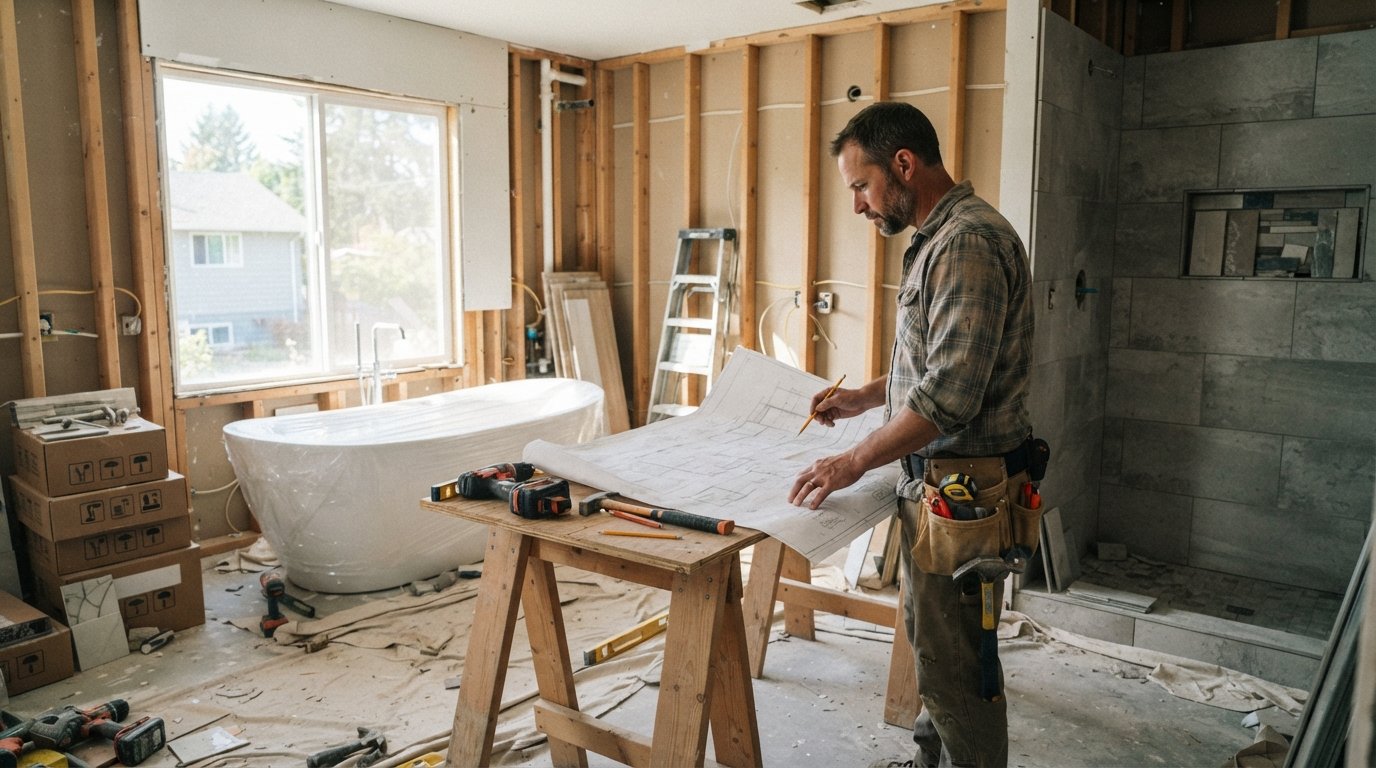
The crew tears out the old bathroom, down to the studs if it is a full gut. This is noisy, dusty work that typically takes two to four days. During this phase, any structural issues (like water damage or outdated wiring) are discovered. If problems arise, the timeline can extend. Expect dumpsters, dust barriers, and daily cleanup.
Weeks 4-5: Rough-In Plumbing and Electrical
With the walls open, plumbers and electricians run new lines for the shower, sink, toilet, and lighting. This is also when the contractor installs the new tub or shower base if it is a prefabricated unit. Rough-in inspections usually happen at the end of this phase. Scheduling the inspection can add a few days, so plan for a buffer.
Weeks 6-7: Insulation, Drywall, and Waterproofing
Once rough-in work is approved, the crew installs insulation, hangs drywall, and applies waterproofing membranes in wet areas. This stage requires careful curing times for mud and waterproofing, so it is not unusual for it to stretch to eight or nine days. The bathroom starts to look like a room again.
Weeks 8-9: Tile Installation and Flooring
Tile work is time-consuming and detail-oriented. Wall tile, shower surrounds, and floors can take one to two weeks, depending on the complexity of the pattern and the type of tile. Mosaic or large-format tiles may require extra care. Grouting and sealing add another day or two.
Weeks 10-11: Fixture and Vanity Installation
With surfaces finished, the crew installs the vanity, sink, faucets, toilet, shower trim, and lighting. This phase also includes mounting mirrors, towel bars, and other accessories. If any fixtures arrived damaged or were backordered, this is when delays surface. Inspections for final plumbing and electrical typically occur now.
Week 12: Final Punch List and Cleanup
The last week is for touch-ups: painting, caulking, adjusting doors, and ensuring everything works. The contractor will walk through with you to create a punch list of minor fixes. Once complete, you get your bathroom back.
This 12-week schedule is a general guide. Smaller projects (like a vanity replacement and new flooring) can wrap up in three to four weeks, while high-end remodels with custom cabinetry and intricate tilework can take 16 weeks or more.
Which Phases Cause the Most Delay and How to Buffer for Them
Even the best-planned remodels hit snags. Knowing where delays commonly occur helps you build a realistic timeline and communicate with your contractor. Here are the top culprits and strategies to mitigate them.
- Permit Approval: Municipalities vary widely in processing times. Some issue permits in days, others take weeks. Submit early and follow up politely. Your contractor should be able to give you an estimate based on local experience.
- Material Lead Times: Tile, vanities, and specialty fixtures often have lead times of four to eight weeks, sometimes longer for custom orders. Supply chain disruptions can still occur. Order materials as soon as the design is finalized, and store them on-site or in a garage if possible.
- Inspection Scheduling: Rough-in and final inspections require a city inspector to visit. Depending on workload, this can add three to seven days per inspection. Your contractor should schedule inspections as soon as the work is ready, but you should still pad the schedule.
- Hidden Damage: Water-damaged subfloor, mold, or outdated wiring discovered during demolition can halt progress. A contingency fund of 10-20% of the project cost helps cover these surprises, but they also add time.
To buffer your timeline, add a two-week cushion to the contractor's estimate. This accounts for the unexpected without throwing your entire plan into chaos. Also, maintain open communication: a good contractor will flag potential delays as soon as they arise, giving you time to adjust.
How Material Lead Times Stretch Timelines
Material selection is not just about aesthetics; it directly impacts your project schedule. In today's market, many homeowners are surprised to find that the tile they love is backordered for months. Understanding lead times for key materials helps you sequence decisions and avoid stalls.
For example, custom vanities often take six to ten weeks from order to delivery. If you wait until demolition to order, you could be staring at an empty bathroom for weeks. Similarly, specialty glass shower enclosures are made to measure and can take four to six weeks. Tile is another variable: in-stock porcelain might ship immediately, but natural stone or handmade tile can have lead times of eight weeks or more. Fixtures like faucets and shower valves are usually in stock, but high-end brands may have longer waits.
To keep your project moving, work with your designer or contractor to finalize all selections before demolition begins. Place orders early and confirm delivery dates. If a material is delayed, consider a temporary alternative or adjust the schedule to tackle other tasks first. For more inspiration on stylish and functional choices, see our guide to 2025 bathroom remodeling trends homeowners should know, which highlights materials and layouts that are both popular and practical.
Permit Inspection Scheduling and Its Effect on Total Project Duration
Permits are a necessary part of most bathroom remodels, especially if you are moving plumbing or electrical lines. The inspection process, while crucial for safety and code compliance, can add days or even weeks to your timeline. Understanding how inspections work helps you plan accordingly.
Typically, a bathroom remodel requires at least two inspections: a rough-in inspection after plumbing and electrical work but before drywall, and a final inspection after all fixtures are installed. Some jurisdictions also require a separate waterproofing inspection. Each inspection must be scheduled with the local building department, and the inspector must visit the site during a window of time. If the inspector finds issues, you may need to make corrections and schedule a re-inspection, which adds more days.
The key to minimizing inspection delays is proactive scheduling. Your contractor should call for inspections as soon as the work is ready, not wait until the end of the week. Some contractors have good relationships with local inspectors and can anticipate scheduling quirks. As a homeowner, you can help by ensuring the site is accessible and that any prior corrections are completed promptly. Always factor inspection time into your overall schedule: even in the best case, each inspection adds two to five days to the project.
If you are hiring a contractor for the first time, it is wise to ask about their experience with local permitting and inspections. A seasoned professional will navigate this process smoothly, but you should still expect some buffer time. For help finding qualified professionals who understand local codes, you can use a platform like FreeQuotes.Contractors to request free quotes from pre-vetted contractors in your area.
Factors That Influence Your Specific Timeline
While the 12-week schedule is a useful benchmark, your actual timeline will depend on several factors. The size of your bathroom matters: a small powder room may take half the time of a large master bath. The scope of work is even more critical: a cosmetic update (new paint, fixtures, and flooring) can be completed in two to three weeks, while a full gut with layout changes takes three to four months. Custom elements like a walk-in shower with multiple showerheads, a freestanding tub, or heated floors add complexity and time. Finally, your contractor's availability and efficiency play a huge role. A well-organized crew with a clear schedule will move faster than one juggling multiple jobs.
Another factor is the time of year. Spring and summer are busy seasons for remodeling, so contractors may be booked out further, and material deliveries might be slower. Winter can be a good time to remodel if you are not affected by weather (bathrooms are interior projects), but holidays can cause scheduling gaps. Discuss your timeline with your contractor and ask for a written schedule with milestones. This keeps everyone accountable and helps you plan around the downtime.
How to Keep Your Bathroom Remodel on Schedule
You are not a passive observer in your remodel. There are several steps you can take to help the project stay on track. First, make decisions quickly. Indecision about tile patterns or paint colors can stall progress. Set a deadline for yourself to finalize selections and stick to it. Second, clear the work area and provide access. The crew needs to get in and out efficiently, so remove personal items and ensure the path to the bathroom is clear. Third, communicate regularly with your contractor. A brief weekly check-in can catch small issues before they become big delays. Fourth, be flexible. If a minor change order is needed, approve it promptly. Finally, keep a contingency budget and timeline buffer. This reduces stress when the unexpected happens.
If you are still in the planning phase, consider using a service that connects you with multiple contractors who can provide detailed timelines and quotes. This allows you to compare schedules and choose a professional whose pace matches your needs. Remember that the lowest bid is not always the fastest or the most reliable; look for a contractor with a solid track record and transparent communication.
In the end, how long does a bathroom remodel take start to finish? For a typical full renovation, plan on 10 to 14 weeks. With careful planning, early material orders, and a proactive approach to inspections, you can keep your project on the shorter end of that range. And when you are ready to hire, take advantage of resources that simplify the process, so you can focus on enjoying your new bathroom rather than managing the chaos.