
Energy-Efficient Home Upgrades That Cut Costs
Energy-efficient home upgrades can cut utility bills and boost comfort. Call (833)-700-4293 to compare local contractors and get free quotes.

By Julia Dawson
Learn more about Solar Panel Installation and Repair for guides, costs, and what to expect.
Compare Solar Panel Installation and Repair Pros Near You

Enter your ZIP code to compare top-rated local professionals and request free quotes.
Your home is likely your largest investment, and every month it quietly drains money through energy waste. Drafty windows, aging appliances, and poorly sealed ducts can add hundreds of dollars to your utility bills while making your living spaces less comfortable. The good news is that energy-efficient home upgrades can reverse that trend, lowering your monthly costs and increasing your property value at the same time. Whether you are planning a major renovation or simply looking for smart, budget-friendly improvements, this guide will walk you through the most impactful upgrades, expected savings, available rebates, and how to hire the right professionals to get the job done correctly.
Why Energy-Efficient Home Upgrades Matter More Than Ever
Energy costs have risen steadily across the United States, and homeowners are feeling the squeeze. According to the Department of Energy, the average household spends more than $2,000 annually on utility bills, with a significant portion wasted through inefficiencies. Upgrading your home's energy performance is no longer just an environmental gesture; it is a financial strategy. Modern materials, appliances, and systems can reduce energy consumption by 20 to 50 percent depending on the scope of the project.
Beyond savings, energy-efficient upgrades improve indoor comfort, reduce noise, and enhance indoor air quality. They also future-proof your home against tightening energy codes and make it more attractive to buyers when you decide to sell. In many markets, energy-efficient homes sell faster and command higher prices. If you are planning a larger renovation, understanding which upgrades deliver the best return on investment is critical, and our guide on energy efficient home upgrades with best ROI can help you prioritize your budget.
Top Energy-Efficient Upgrades for Your Home
Not all upgrades are created equal. Some deliver immediate savings with minimal disruption, while others require a larger investment but pay off over time. The following categories represent the most effective energy-efficient home upgrades available today, ranked by impact and practicality for most households.
Windows and Doors: Stop the Leaks
Windows and doors are among the biggest culprits for energy loss. Older single-pane windows allow heat to escape in winter and enter in summer, forcing your HVAC system to work harder. Upgrading to double-pane or triple-pane windows with low-E coatings and argon gas fills can cut heating and cooling costs by 15 to 30 percent. Look for the ENERGY STAR label, which certifies products that meet strict efficiency guidelines set by the EPA.
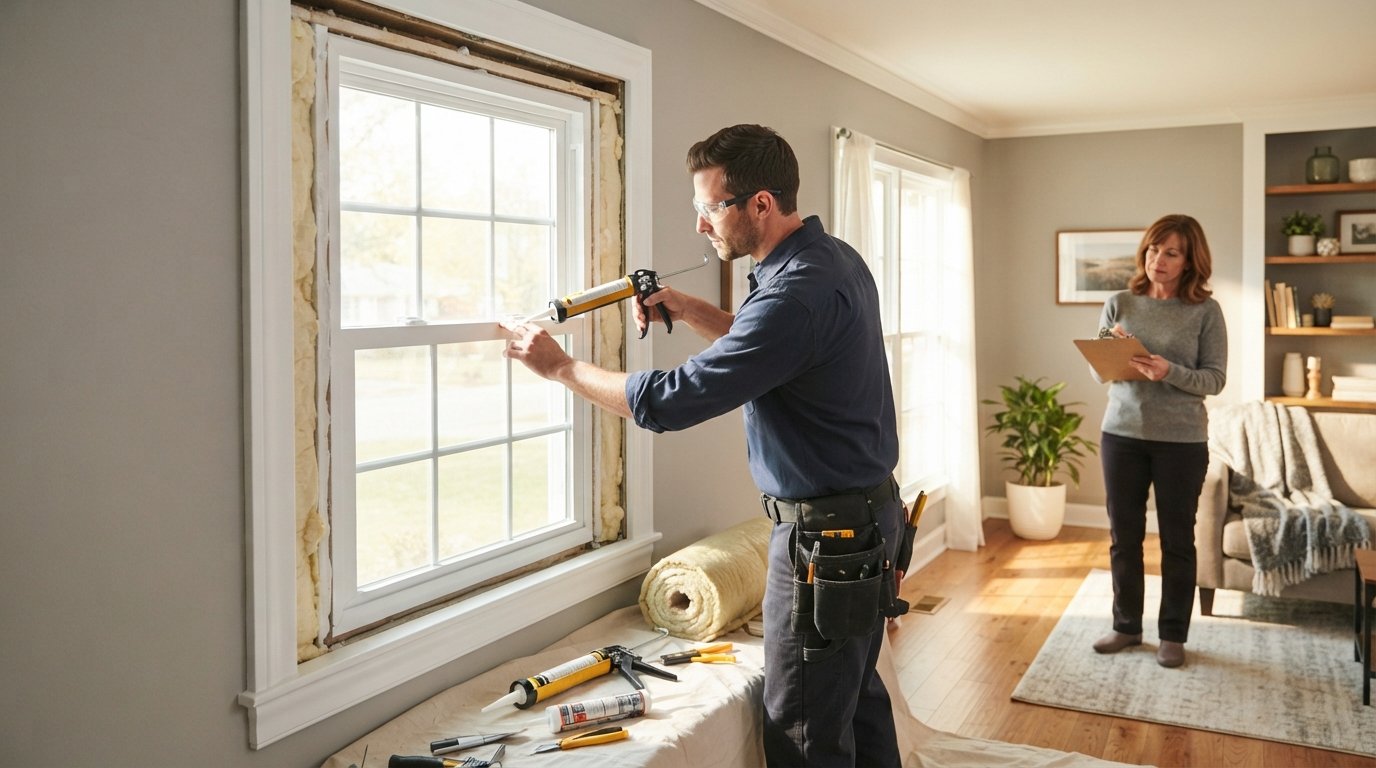
Proper installation is just as important as the product itself. Even the best windows will underperform if they are not sealed correctly. Hiring a qualified window contractor ensures that frames, flashing, and insulation are installed to manufacturer specifications, preventing air leaks and moisture problems. If your budget is tight, start with the windows on the north and west sides of your home, which typically face the most extreme temperature swings.
Insulation and Air Sealing: The Invisible Savings
Many homes, especially older ones, are under-insulated and riddled with hidden air leaks. Adding insulation to your attic, walls, and crawl spaces is one of the most cost-effective energy-efficient home upgrades you can make. The EPA estimates that homeowners can save an average of 15 percent on heating and cooling costs by air sealing their homes and adding insulation in attics, floors over crawl spaces, and accessible basement rim joists.
Air sealing complements insulation by closing gaps around pipes, vents, windows, and doors. A professional energy audit can identify exactly where your home is losing energy, giving you a targeted plan rather than guesswork. Many utility companies offer free or discounted audits, and some contractors include them as part of a comprehensive weatherization package.
HVAC Systems: Efficiency at the Core
Heating and cooling account for nearly half of a typical home's energy use. If your furnace or air conditioner is more than 10 to 15 years old, replacing it with a high-efficiency model can deliver substantial savings. Modern heat pumps, for example, can heat and cool your home with far less energy than traditional systems, and they qualify for federal tax credits and local rebates.
Regular maintenance is equally important. A well-maintained HVAC system runs more efficiently and lasts longer. Changing filters monthly, scheduling annual tune-ups, and sealing ductwork can improve performance by 20 percent or more. When it is time to replace your system, insist on a Manual J load calculation to ensure the new unit is sized correctly for your home. An oversized or undersized system will waste energy and fail to keep you comfortable.
Water Heating: The Silent Energy Consumer
Water heating is the second-largest energy expense in most homes, accounting for about 18 percent of utility bills. Upgrading to a tankless or heat pump water heater can significantly reduce that cost. Heat pump water heaters, in particular, are two to three times more efficient than conventional electric resistance water heaters and often qualify for rebates.
Simple behavioral changes also help: lowering the thermostat to 120 degrees Fahrenheit, insulating the water heater tank and pipes, and fixing leaks promptly. If your water heater is nearing the end of its lifespan (typically 10 to 12 years), planning a replacement before it fails gives you time to research options and secure incentives.
Solar and Renewable Energy
Solar panels have become increasingly affordable and are a powerful way to reduce or eliminate your electric bill. A well-designed solar installation can offset 50 to 100 percent of your household electricity use, depending on system size and local sunshine. Federal tax credits, state incentives, and net metering policies can shorten the payback period to seven to ten years in many markets. However, solar is a significant investment and requires a qualified installer to ensure proper roof mounting, wiring, and permitting. If you are considering solar, start with an energy audit to reduce your consumption first; it is almost always cheaper to save a watt than to generate one.
Rebates, Tax Credits, and Financial Incentives
One of the biggest barriers to energy-efficient home upgrades is upfront cost. Fortunately, a wide range of financial incentives can offset a substantial portion of your investment. The federal government offers tax credits for qualifying improvements such as solar panels, geothermal heat pumps, and certain insulation products. Many states and utilities also provide rebates for high-efficiency appliances, HVAC systems, and weatherization measures.
Navigating these programs can be confusing, as eligibility requirements and application processes vary widely. A knowledgeable contractor can often help you identify and apply for available incentives, and some utilities list approved contractors on their websites. Before you commit to any upgrade, research the incentives available in your area and factor them into your budget. Keep all receipts and documentation, as you will need them to claim credits or rebates.
How to Hire the Right Contractor for Energy-Efficient Upgrades
Even the most efficient products will underperform if they are installed incorrectly. Hiring a qualified, experienced contractor is essential for maximizing the benefits of your investment. Start by getting written estimates from at least three licensed contractors. Ask about their experience with energy-efficient products, whether they are certified by programs like ENERGY STAR or the Building Performance Institute, and whether they offer warranties on labor and materials.
Check references and online reviews, and verify that the contractor carries proper insurance and licensing for your state. Be wary of high-pressure sales tactics or unusually low bids, which often signal cut corners. A reputable contractor will take the time to assess your home, explain your options, and provide a detailed proposal with clear pricing and timelines. For a hassle-free way to connect with pre-vetted local professionals, consider using a service like FreeQuotes.Contractors to request multiple free quotes and compare bids side by side.
Planning Your Upgrade Strategy: A Step-by-Step Approach
With so many options, it is easy to feel overwhelmed. A strategic approach will help you prioritize upgrades based on your budget, your home's specific needs, and the incentives available to you. Follow these steps to build a plan that delivers maximum savings with minimum disruption.
- Get a home energy audit. A professional audit will identify the biggest sources of energy waste in your home, from air leaks to inefficient appliances. Use the findings to prioritize your upgrades.
- Start with the low-hanging fruit. Air sealing, insulation, and programmable thermostats are inexpensive and deliver immediate savings. Tackle these before investing in larger systems.
- Research incentives. Check federal, state, and utility rebate programs to see which upgrades qualify for financial support. Plan your projects around available incentives.
- Hire qualified contractors. Get multiple quotes, verify credentials, and choose professionals who specialize in energy-efficient installations.
- Measure and verify. After each upgrade, compare your utility bills to your previous usage to confirm savings. Adjust your strategy as needed.
This phased approach allows you to spread costs over time and ensures that each investment builds on the last. For example, sealing air leaks before replacing your HVAC system means your new system will not have to work as hard, extending its lifespan and improving its efficiency.
Avoiding Common Mistakes
Many homeowners make avoidable errors when pursuing energy-efficient upgrades. One common mistake is focusing solely on the product's rated efficiency while ignoring installation quality. A high-efficiency furnace connected to leaky ductwork will not deliver the promised savings. Another mistake is skipping the energy audit and guessing where the problems are. Without data, you may invest in the wrong upgrades and miss the biggest opportunities.
It is also important to avoid over-investing in efficiency measures that do not align with your home's characteristics or your local climate. For instance, solar panels may not be cost-effective if your roof is shaded or needs replacement soon. A reputable contractor can help you evaluate your options objectively and avoid costly missteps. Finally, do not forget to factor in maintenance costs. Some systems, like heat pumps, require regular servicing to maintain peak efficiency.
Maximizing Comfort and Savings Year-Round
Energy-efficient home upgrades are a smart investment that pays dividends in comfort, savings, and property value. By taking a strategic approach, starting with an energy audit, and hiring qualified professionals, you can transform your home into a more efficient, comfortable, and valuable asset. Whether you are replacing windows, upgrading your HVAC system, or adding insulation, each improvement brings you closer to lower bills and a smaller environmental footprint.
Remember that the best results come from a whole-home approach: sealing air leaks, insulating properly, and choosing high-efficiency equipment that works together as a system. And when you are ready to hire, take advantage of free quote services to compare local contractors and find the right professional for your project. With careful planning and the right partners, your energy-efficient upgrades will deliver benefits for years to come.
Learn more about Solar Panel Installation and Repair for guides, costs, and what to expect.
Compare Solar Panel Installation and Repair Pros Near You
Enter your ZIP code to compare top-rated local professionals and request free quotes.