
Attic Ventilation Problems and How to Spot Them
Identify attic ventilation problems early to avoid roof damage and high cooling bills. Call (833)-700-4293 for expert help and free quotes.

By Alice Griffin
Learn more about Exterior Painting for guides, costs, and what to expect.
Compare Exterior Painting Pros Near You

Enter your ZIP code to compare top-rated local professionals and request free quotes.
Your attic is one of the most overlooked spaces in your home, yet it plays a critical role in your roof's health, your energy bills, and your indoor comfort. When attic ventilation fails, the damage rarely stays confined to the attic. It can rot roof decking, void manufacturer warranties, and send cooling costs soaring. The challenge is that ventilation problems develop quietly, often hidden behind insulation or above your line of sight, so homeowners frequently miss the warning signs until a small issue becomes an expensive repair. Understanding how attic ventilation works and what early symptoms look like is the first step toward protecting your home and knowing when to call in a professional.
How Attic Ventilation Works and Why It Matters
A properly ventilated attic relies on a balanced system of intake and exhaust. Intake vents, typically located in the soffits under the roof eaves, allow cooler outside air to enter the attic. Exhaust vents, which can be ridge vents, gable vents, or static roof vents near the peak, allow hot, moist air to escape. This continuous flow creates a cycle that keeps the attic temperature closer to the outdoor temperature and removes moisture before it can condense on framing and decking.
When this balance is disrupted, the attic becomes a trap. In summer, trapped heat can push temperatures well above 140 degrees Fahrenheit, baking shingles from underneath and shortening the life of your roof. In winter, warm moist air from living spaces rises into the attic, where it meets cold roof sheathing and condenses into water droplets. Over time, that moisture feeds mold, rots wood, and can even drip back down into ceilings and insulation.
The stakes are higher than many homeowners realize. Poor ventilation can void asphalt shingle warranties, reduce the effectiveness of insulation, and create ice dams in cold climates. It also forces your air conditioning system to work harder, driving up energy costs. According to the U.S. Department of Energy, a well-ventilated attic can reduce cooling costs and extend the life of your roof. Spotting problems early is far cheaper than repairing the damage they cause.
Signs of Trapped Heat and Moisture in the Attic
The earliest clues of ventilation trouble often appear in the attic itself, but they can also show up in living spaces below. Knowing what to look for helps you act before damage spreads.
Start by checking the attic on a hot day. If the air feels significantly hotter than the outdoor temperature, or if you notice a strong, stale, overheated smell, exhaust ventilation is likely inadequate. Another common sign is a roof deck that feels hot to the touch, which indicates heat is not escaping. In winter, look for frost or condensation on the underside of the roof sheathing, especially near the ridge. This is a clear signal that warm moist air is trapped and condensing.
Outside the attic, watch for these indicators:
- Ice dams: Uneven attic temperatures melt snow on the roof, which refreezes at the eaves, creating dams that force water under shingles.
- Discolored ceilings or walls: Brownish stains or peeling paint near the top of rooms can indicate moisture migrating from the attic.
- Musty odors: A persistent musty smell in upstairs rooms often points to mold growth in the attic.
- High summer cooling bills: If your air conditioner struggles to keep up, trapped attic heat may be radiating down through the ceiling.
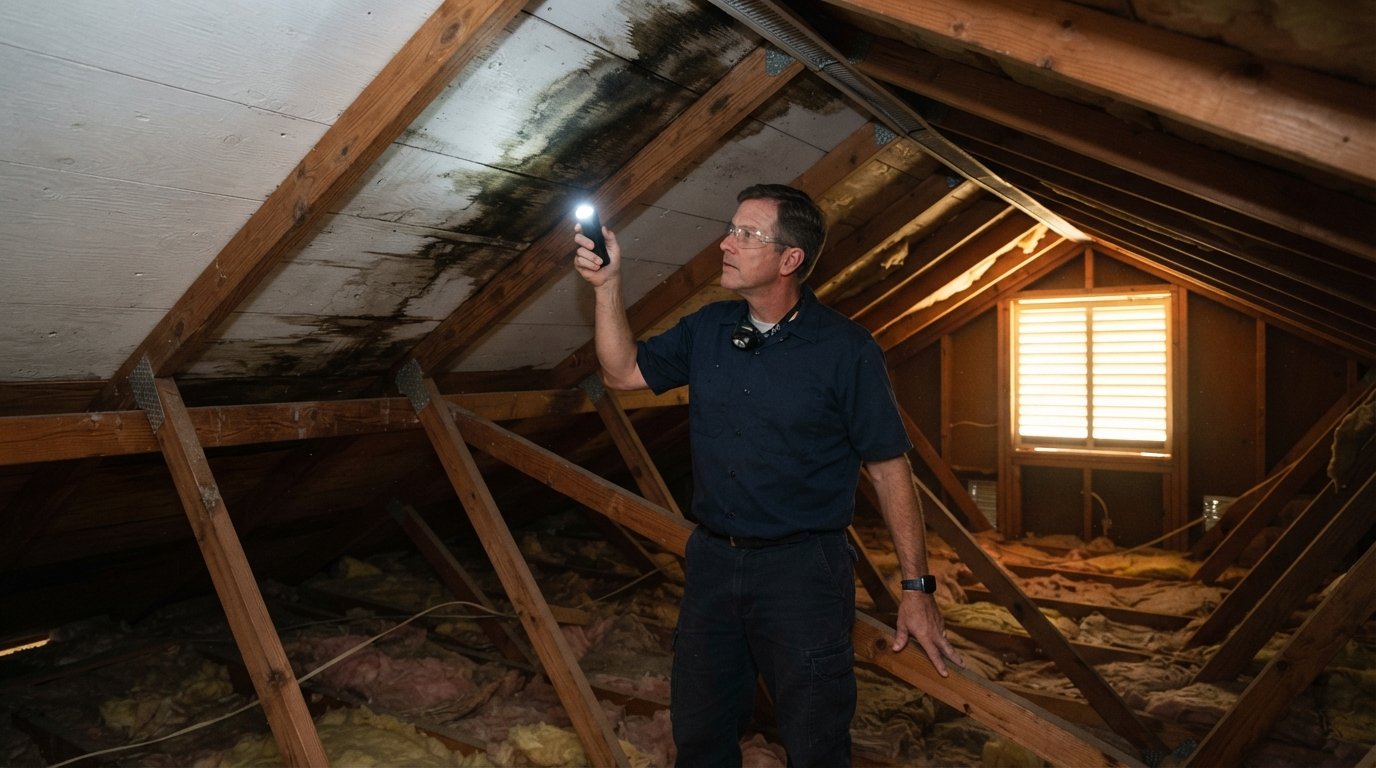
- Visible mold or mildew: Black or green patches on roof decking, rafters, or insulation are a serious red flag.
If you notice any of these signs, it is worth investigating further. A simple visual inspection from inside the attic can reveal a lot, but some problems, like blocked soffit vents, are easier to spot from the outside. In either case, documenting what you find will help a professional diagnose the issue accurately.
How Intake and Exhaust Vents Work Together
Balanced ventilation depends on both intake and exhaust working in harmony. A common mistake is to add more exhaust vents without ensuring adequate intake. This creates negative pressure in the attic, which can actually pull conditioned air from your living space into the attic, increasing moisture problems and energy waste. The reverse is also true: plenty of intake without sufficient exhaust means air enters but cannot escape, so heat and moisture still accumulate.
The general rule of thumb is that intake and exhaust capacity should be roughly equal, with a slight bias toward intake to maintain positive pressure. The exact requirements depend on attic size, roof design, and local building codes. For every 150 square feet of attic floor space, you typically need about 1 square foot of net free ventilation area, split between intake and exhaust. However, complex roof lines, dormers, and finished attics can complicate these calculations.
Homeowners often ask how to tell if their vents are balanced. Look for a clear path from soffit to ridge. If soffit vents are blocked by insulation, paint, or debris, intake is compromised. If ridge vents are covered by shingles or installed incorrectly, exhaust suffers. In some homes, gable vents are the only exhaust, which may be insufficient for larger attics. A professional can measure net free area and recommend adjustments, such as adding ridge vents, baffles, or a powered ventilator.
Why Adding Insulation Without Ventilation Can Backfire
Insulation and ventilation are partners, not substitutes. Adding insulation without addressing ventilation can trap moisture and heat, making problems worse. For example, if you blow insulation into the attic floor but block the soffit vents in the process, you cut off intake air. The attic then overheats in summer and condenses moisture in winter, potentially leading to mold and rot.
This is especially common in older homes where insulation is upgraded without considering airflow. The right approach is to maintain a clear channel from the soffit to the attic space using baffles or rafter vents. These simple foam or plastic channels keep insulation from covering the vents while allowing air to flow freely. Before adding insulation, always check that intake and exhaust vents are open and functioning.
If you are planning an insulation project, it is wise to consult a professional who can assess your attic's ventilation first. In our guide on spray foam vs fiberglass insulation for attics, we explain how different insulation materials interact with ventilation and which might suit your home. Getting the order of operations right, ventilation before insulation, can save you from costly moisture problems down the road.
Condensation and Mold Risks on Roof Decking
Condensation is one of the most destructive forces in an attic. It forms when warm, moist air meets a cold surface. In winter, the underside of the roof deck is often the coldest spot, so moisture from cooking, bathing, and even breathing accumulates there. Over time, this moisture can saturate the wood, leading to mold, mildew, and rot.
Mold on roof decking is not just an aesthetic issue. It can compromise the structural integrity of the roof and create health risks for occupants. Black mold, in particular, can cause respiratory problems and allergic reactions. If you see fuzzy growth, dark staining, or a musty odor in the attic, assume mold is present and act quickly.
Preventing condensation requires reducing moisture sources and improving ventilation. Ensure that bathroom and kitchen exhaust fans vent directly outside, not into the attic. Seal gaps around light fixtures, wiring, and the attic hatch to prevent warm air from leaking upward. And most importantly, keep intake and exhaust vents clear and balanced. If condensation persists, a professional may recommend adding a vapor barrier or adjusting the ventilation system.
When to Bring in a Roofing or Insulation Professional
While some ventilation maintenance, like clearing soffit vents or removing debris, is safe for homeowners to tackle, many problems require professional expertise. If you spot mold, rot, or significant condensation, or if you are planning a roof replacement or insulation upgrade, it is time to call a pro. A qualified roofing contractor can inspect the entire system, measure ventilation capacity, and recommend solutions that meet building codes and manufacturer specifications.
Hiring the right professional matters. Look for contractors who are licensed, insured, and experienced in attic ventilation. Ask for a detailed assessment that includes intake and exhaust calculations, not just a quick visual check. A reputable contractor will also explain how ventilation ties into your overall roof and insulation strategy, rather than pushing a one size fits all fix.
To simplify the process of finding trusted local experts, consider using a platform like FreeQuotes.Contractors, which connects homeowners with pre-vetted contractors and provides free, competitive quotes. This can save you time and help you compare options without pressure. Whether you need a roofer to assess ventilation or an insulation specialist to ensure proper airflow, getting multiple quotes is a smart way to make an informed decision.
Practical Steps to Spot and Prevent Attic Ventilation Problems
Regular inspections are your best defense against ventilation failures. Make it a habit to check your attic at least twice a year, ideally in late spring and early fall. Use a flashlight to examine the roof deck, rafters, and insulation for signs of moisture, mold, or pest activity. From the outside, check that soffit vents are not blocked by insulation, paint, or debris, and that ridge vents are clear of shingles or obstructions.
Here are key steps to both spot and prevent problems:
- Inspect for condensation and mold: Look for frost, water stains, or dark patches on wood surfaces.
- Verify airflow at soffits and ridge: Ensure air can move freely; use a tissue or smoke test to check for draft.
- Check insulation placement: Make sure insulation does not cover soffit vents; install baffles if needed.
- Seal air leaks: Use caulk or foam to seal gaps around fixtures and the attic hatch.
- Schedule a professional assessment: Have a contractor measure ventilation and recommend upgrades if necessary.
By following these steps, you can catch small issues before they become big expenses. Remember that ventilation is a system, and every component matters. Even if you have ridge vents, blocked soffits will undermine the entire setup. Similarly, adding a powered attic fan without proper intake can create more problems than it solves.
If you are unsure about any aspect of your attic's ventilation, do not hesitate to seek professional guidance. A thorough inspection now can prevent costly roof repairs, mold remediation, and energy waste later. Your home's comfort and longevity depend on a healthy attic, and spotting the signs early is the key.