
Whole House Repiping: Signs You Need It and What to Expect
Spot the warning signs of failing pipes and know what to expect during whole house repiping. Call (833)-700-4293 to compare local plumbing quotes.

By Henry Ellis
Learn more about Emergency Plumbing for guides, costs, and what to expect.
Compare Emergency Plumbing Pros Near You

Enter your ZIP code to compare top-rated local professionals and request free quotes.
Your home's plumbing is mostly out of sight, but it never stops working. When pipes start to fail, the warning signs often appear gradually: a faint metallic taste in the morning glass of water, a brownish tinge that clears after a few minutes, or a water bill that creeps up without explanation. For homeowners in older properties, these small annoyances can signal a much larger problem lurking behind the walls. Whole house repiping is a major project, but it is also one of the most reliable ways to protect your home's value and your family's comfort. This guide walks you through the warning signs that repiping may be necessary, how pipe material and home age factor into the decision, what the project involves day by day, and how to plan for the disruption so you can hire with confidence.
Warning Signs That Point to Whole House Repiping
Not every plumbing issue requires a full repipe. A single leaky fixture or a clogged drain is usually a localized problem. However, when multiple symptoms appear across different parts of the house, the underlying cause is often the piping system itself. The most common red flags include discolored water, frequent leaks, and a noticeable drop in water pressure. Each of these tells a story about what is happening inside your pipes.
Discolored water is often the first sign homeowners notice. Rust-colored or yellowish water usually indicates that iron or galvanized steel pipes are corroding from the inside out. If the discoloration appears only when you first turn on the tap and clears after a few seconds, sediment is likely building up in the lines. Persistent discoloration, however, suggests that the pipe walls are deteriorating and releasing particles into the water supply. This is not just an aesthetic issue; it can affect water quality and signal that the pipes are nearing the end of their service life.
Frequent leaks are another strong indicator. If you have repaired the same pipe multiple times or if leaks are appearing in different locations, the problem is systemic. Older pipes, especially those made of galvanized steel or polybutylene, become brittle and develop pinhole leaks over time. These small leaks can cause hidden water damage behind walls, under floors, and in ceilings, leading to mold growth and structural problems. A water bill that spikes without a corresponding increase in usage is often a clue that a hidden leak is wasting water.
Water pressure loss is a third major warning sign. When pipes corrode or accumulate mineral deposits, the internal diameter shrinks, restricting flow. You might notice that the shower pressure has weakened, that it takes longer to fill the sink, or that running two fixtures at once causes a dramatic drop in pressure. In homes with galvanized steel pipes, this narrowing is almost inevitable over decades of use. If you have ruled out clogs and your pressure is still poor, the pipes themselves are likely the culprit.
Other symptoms that often accompany these three primary signs include noisy pipes (banging or rattling when water runs), a metallic taste in the water, and visible rust or corrosion on exposed pipes in the basement or utility room. If you are experiencing two or more of these issues, it is time to consult a professional. A licensed plumber can perform a camera inspection to assess the condition of your pipes and recommend whether a whole house repipe is the right solution. For homeowners who want to compare qualified plumbing contractors in their area, FreeQuotes.Contractors offers a free quote request system that connects you with pre-vetted local professionals.
How Pipe Material and Home Age Drive the Decision
The material of your pipes and the age of your home are two of the most important factors in determining whether repiping is necessary. Different materials have different lifespans, and some are more prone to failure than others. Understanding what is behind your walls can help you make an informed decision and avoid emergency repairs.
Galvanized steel pipes were common in homes built before the 1960s. These pipes were coated with zinc to resist rust, but over time the coating wears away and the steel corrodes. By the time galvanized pipes reach 40 to 50 years of age, they are often narrowed significantly and prone to leaks. Many insurers will not cover water damage claims in homes with galvanized plumbing, which adds a financial incentive to repipe. If your home was built before 1970 and still has its original plumbing, there is a good chance it is galvanized steel.
Polybutylene pipes were used from the late 1970s through the mid-1990s. These gray plastic pipes were inexpensive and easy to install, but they have a well-documented history of failure. They become brittle over time and can burst without warning, causing catastrophic water damage. Many insurance companies now refuse to insure homes with polybutylene plumbing, and some mortgage lenders require repiping before closing. If you have gray plastic pipes in your home, repiping is not a matter of if but when.
Copper pipes are more durable and have a lifespan of 50 to 70 years, but they are not immune to problems. In areas with aggressive water (low pH or high mineral content), copper can develop pinhole leaks. Older copper systems with many soldered joints are also more susceptible to failures at the connections. If your home has copper pipes that are approaching the 50-year mark, it is worth having them inspected.
PEX (cross-linked polyethylene) is the modern standard for residential plumbing. It is flexible, resistant to corrosion and freeze damage, and has a lifespan of 50 years or more. PEX also requires fewer joints, which reduces the risk of leaks. If you are repiping, PEX is often the most cost-effective and reliable choice, though some homeowners prefer copper for its perceived durability and resale value. The decision often comes down to local code requirements, budget, and your plumber's recommendation.
What a Whole House Repiping Project Involves Day by Day
Whole house repiping is a significant project, but it is also a well-orchestrated process that most plumbing crews have refined over many jobs. Understanding the timeline helps you plan for water shutoffs, drywall repair, and the temporary disruption to your daily routine. Most repiping projects take anywhere from two to five days, depending on the size of the home and the complexity of the layout.
Before work begins, your plumber will perform a thorough inspection, often using a camera to map the existing pipes and identify any hidden issues. You will receive a detailed quote that outlines the scope of work, the materials to be used (PEX, copper, or a combination), and the expected timeline. This is also the time to discuss water shutoff procedures and how the crew will protect your floors and belongings. Once the contract is signed and permits are pulled (if required), the project moves into the active phase.
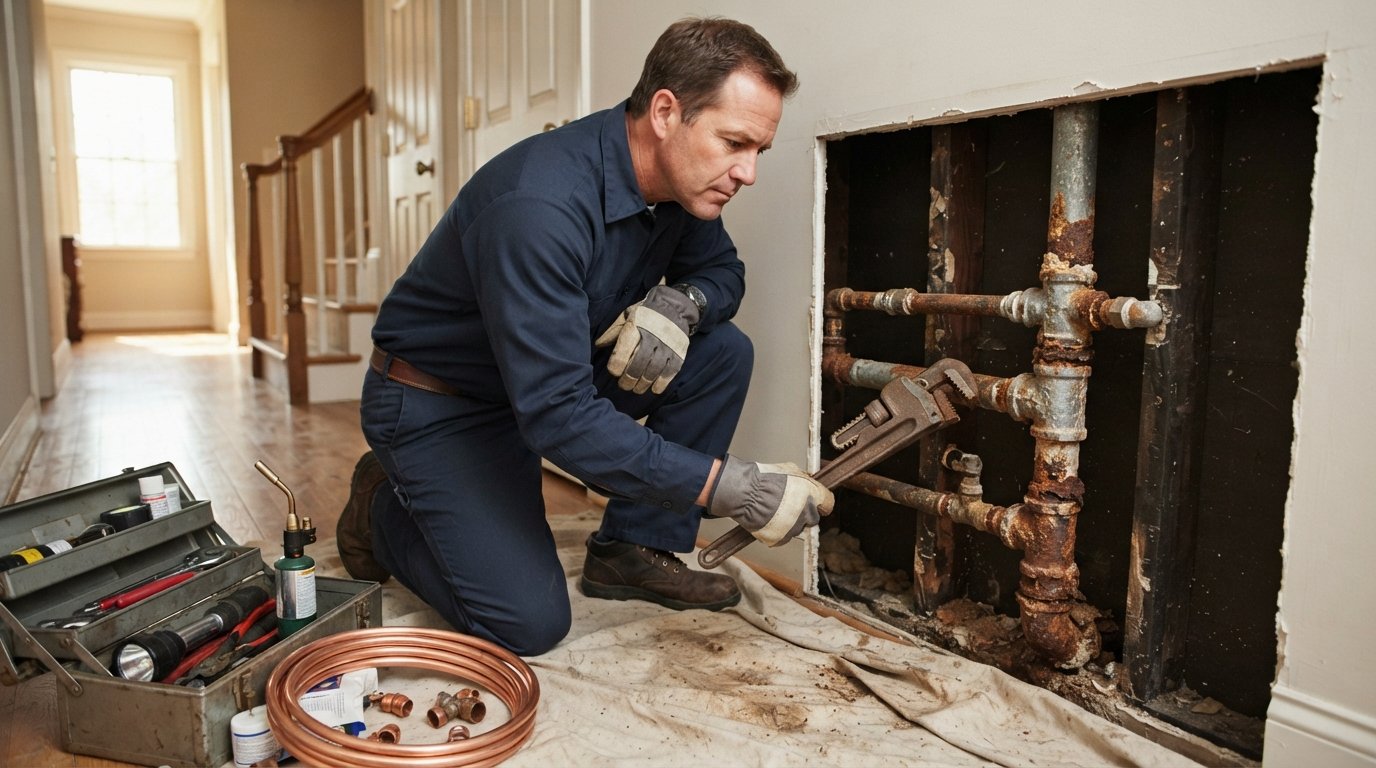
On day one, the crew typically starts by shutting off the main water supply and draining the system. They will then begin removing the old pipes, often working from the basement or crawlspace upward. In some cases, they may need to cut small access holes in drywall to reach pipes behind walls. The number and size of these holes depend on the home's layout and the plumber's strategy. Many crews use a fish tape or flexible rods to pull new pipes through existing chases without extensive demolition, which minimizes drywall damage.
Days two and three are usually the most active. The crew installs the new piping, running lines from the main water source to each fixture. If you are switching from galvanized steel to PEX, the installation is often faster because PEX is flexible and can be routed through attics and crawlspaces with fewer fittings. The plumber will also install new shutoff valves at each fixture, which is a good opportunity to upgrade to quarter-turn valves for easier maintenance. Throughout this phase, the crew will test the system for leaks, often by pressurizing it with air or water and checking each connection.
On the final day, the plumber will restore water service, test every fixture (faucets, toilets, showers, appliances), and check for leaks. They will also flush the system to remove any debris or air pockets. If the project required cutting into drywall, the plumber may patch the holes or recommend a drywall contractor for a seamless finish. Many repiping contracts include drywall repair, but it is important to confirm this before signing. After the work is complete, you should receive a warranty and a walkthrough of the new system, including the location of the main shutoff valve and any new access panels.
Planning for Water Shutoffs and Drywall Repair
One of the biggest concerns homeowners have about repiping is the disruption to daily life. Water will be shut off for extended periods during the project, often for several hours at a time. The crew will typically shut off water in the morning and restore it by the end of the workday, but there may be days when the water is off for the majority of the day. Planning ahead can make the experience much smoother.
Before the project starts, stock up on bottled water for drinking and cooking. If you have young children or elderly family members, consider making temporary arrangements for bathroom facilities, especially on days when the water will be off for long stretches. Many plumbing crews will set up a temporary water source (such as a hose bib) for essential needs, but it is best to ask in advance. You should also clear access to the areas where the crew will work, including basements, crawlspaces, closets, and utility rooms. Moving furniture and personal belongings away from walls can speed up the process and reduce the risk of damage.
Drywall repair is another consideration. While modern repiping techniques minimize the need for demolition, some access holes are often unavoidable, especially in homes with complex layouts or pipes that run behind finished walls. The size and number of holes depend on the plumber's approach: some crews are skilled at making small, precise cuts that are easy to patch, while others may need larger openings. Before signing a contract, ask whether drywall repair is included and who is responsible for painting and finishing. Some plumbing companies have drywall technicians on staff, while others subcontract the work. If you plan to hire a separate drywall contractor, factor that cost and scheduling into your overall budget.
It is also wise to plan for a temporary increase in dust and noise. The crew will use saws, drills, and other tools, and removing old pipes can create debris. Covering furniture and floors in the work areas with plastic sheeting can protect your belongings. If you work from home, you may want to schedule the project during a time when you can be away from the house during the day, or set up a quiet workspace away from the action.
Questions to Ask a Plumbing Contractor Before Signing
Hiring the right contractor is the most important decision you will make during the repiping process. A qualified, experienced plumber will not only do the job correctly but also help you navigate permits, inspections, and warranty coverage. Before you sign a contract, ask these key questions to ensure you are comparing apples to apples and protecting your investment.
- Are you licensed and insured? Ask for the license number and verify it with your state or local licensing board. Also confirm that the company carries both general liability insurance and workers' compensation coverage. This protects you from liability if an accident occurs on your property.
- What is included in the quote? A detailed quote should specify the pipe material (PEX, copper, or other), the number of fixtures, drywall repair, permits, and cleanup. Beware of quotes that are vague or unusually low; they may exclude important items that will become expensive add-ons later.
- Will you pull the required permits? Most municipalities require a permit for repiping, and the work must be inspected by a local code official. A reputable contractor will handle the permitting process and schedule the inspection. If a contractor suggests skipping the permit to save time or money, walk away.
- What kind of warranty do you offer? Ask about both the labor warranty and the manufacturer's warranty on the pipes. A solid labor warranty is typically at least one year, but some companies offer longer coverage. Get the warranty terms in writing.
- How will you handle water shutoffs and daily cleanup? A professional crew will have a clear plan for minimizing disruption, including daily cleanup and a schedule for water restoration. Ask how they will protect your floors and belongings and whether they will move furniture if needed.
Beyond these questions, trust your instincts. A good contractor will be responsive, transparent, and willing to answer your questions in plain language. They will also provide references from recent repiping jobs in your area. If possible, ask to see photos of completed work or speak with past clients. For homeowners who want to streamline the process of finding and comparing qualified plumbers, FreeQuotes.Contractors connects you with pre-vetted local contractors and provides free, competitive quotes so you can make an informed decision without the guesswork.
Making the Decision with Confidence
Whole house repiping is a significant investment, but it is also an opportunity to upgrade your home's plumbing to modern standards, improve water quality, and protect your property from costly water damage. The warning signs, discolored water, frequent leaks, and pressure loss, are your home's way of telling you that the plumbing is nearing the end of its useful life. By understanding how pipe material and home age factor into the decision, planning for the project's timeline and disruptions, and asking the right questions before hiring, you can approach repiping with confidence rather than anxiety. Take the time to get multiple quotes, verify credentials, and choose a contractor who prioritizes clear communication and quality workmanship. Your home's plumbing is an investment that will serve you for decades to come.