
Solar Panel Maintenance and Cleaning for Homeowners
Keep your solar investment performing with a simple maintenance and cleaning routine. Call (833)-700-4293 to connect with pre-vetted local solar pros.

Find Local Pros Near You

Enter your ZIP code to compare top-rated local professionals and request free quotes.
Your solar panels are quietly turning sunlight into savings, but they are not maintenance-free. Dust, pollen, bird droppings, and even a single shaded cell can quietly erode your system's output for months before you notice a change on your utility bill. For homeowners who want to protect a five-figure investment, a simple solar panel maintenance and cleaning routine is the difference between a system that performs for 25 years and one that underdelivers year after year. The good news: most upkeep is straightforward, and knowing when to handle it yourself versus when to call a professional keeps costs low and safety high.
How Often Should You Clean Solar Panels?
There is no universal cleaning schedule, and anyone who gives you a fixed number without asking about your location is guessing. In most U.S. climates, panels need a cleaning two to four times per year. Homes near farmland, construction sites, or busy highways collect dust faster and may need quarterly cleaning. Coastal areas deal with salt film, while wooded lots battle pollen and bird droppings. Rooftop arrays tilted at 15 degrees or more often self-clean during rain, so many homeowners in the Northeast and Pacific Northwest get away with an annual inspection and spot cleaning.
Rather than following a calendar blindly, let performance and visible soiling guide you. If you can see a dull film or droppings from the ground, it is time to act. If your monitoring app shows a gradual dip that does not match weather patterns, cleaning is a likely fix. The one rule that applies everywhere: never clean panels hot. Glass can crack when cold water hits a sun-baked surface, so clean early in the morning or on an overcast day.
Safe Cleaning Practices for Homeowners
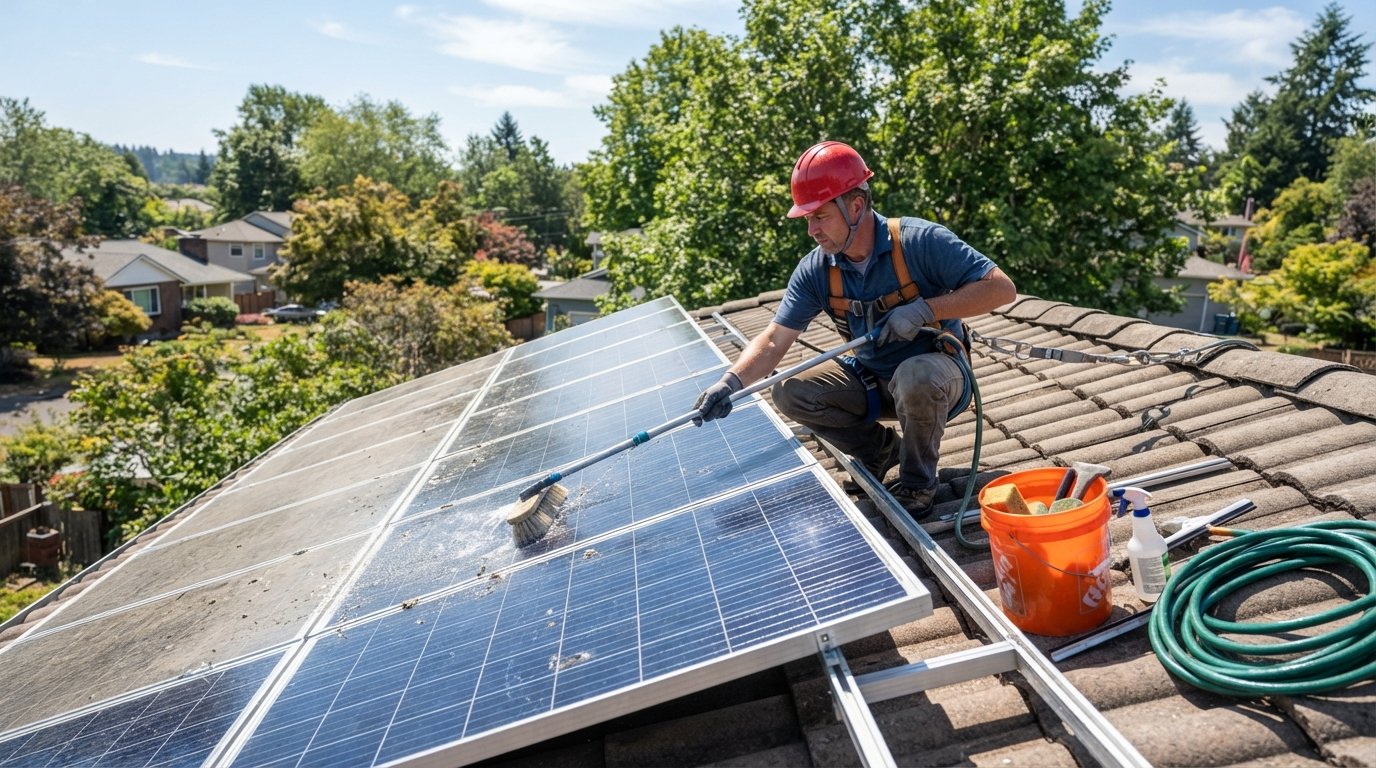
Cleaning solar panels is not the same as washing a window. The glass is tempered but the frame, wiring, and junction boxes are not designed for high-pressure water or abrasive tools. A garden hose, a soft-bristle brush with an extension pole, and a mild soap solution handle most jobs. Skip the pressure washer entirely: it can force water past seals and void warranties. Also avoid abrasive sponges, powder cleansers, and any product containing solvents.
Safety is the bigger issue. Most residential arrays sit on sloped roofs, and falls are the leading cause of home injury during maintenance. If your panels are on a second story, on a steep pitch, or require walking near skylights or power lines, hire a professional. Ground-mounted arrays are far easier and safer for DIY cleaning. Before you climb anything, check your inverter's manual and your installer's warranty terms, because some manufacturers require professional cleaning to keep coverage intact.
Follow this sequence for a safe, effective cleaning session:
- Turn off the system at the inverter or AC disconnect if your manual recommends it, and never touch wiring.
- Work early in the morning when panels are cool and the sun is low.
- Rinse loose dirt with a garden hose, then scrub gently with a soft brush and mild soap.
- Rinse thoroughly and squeegee or air-dry to prevent water spots.
- Inspect the glass and frame for cracks, corrosion, or loose mounts while you are up there.
After cleaning, note the date and any issues you spotted. A simple log helps you spot trends, like recurring droppings under a favorite perch or corrosion on a mounting bracket, and gives your installer useful context during service calls. For homeowners planning a larger system upgrade or new installation, understanding long-term upkeep costs belongs in the same conversation as how solar panels increase home value and reduce bills, since buyers increasingly ask about maintenance records during inspections.
Monitoring Output to Catch Underperformance Early
Your solar monitoring app is the single most valuable maintenance tool you own. Most systems report production daily, and many flag underperforming panels or strings automatically. The skill is learning what normal looks like: production should rise and fall with weather and seasons, peaking in summer and dipping in winter. A sudden 20 percent drop on a clear day, or one panel consistently lagging its neighbors, signals a problem worth investigating.
Common causes of underperformance include soiling, shading from new tree growth, a tripped breaker, or a failing microinverter. Before assuming the worst, compare your production against a nearby system or your own historical data for the same month. If the gap persists after cleaning and trimming, it is time to call a professional. Catching a single failing optimizer or a loose connection early prevents small faults from cascading into string-wide outages and lost savings.
When to Call an Installer Versus a General Roofer
Not every solar problem belongs to the company that installed your system. Understanding the division of responsibility saves you time and money. Your solar installer handles everything electrical: inverters, wiring, optimizers, monitoring systems, and panel-level faults. A licensed general roofer handles the roof itself, including flashing, shingles, and leaks around mounting points. If water is entering the attic, call a roofer. If the system is producing zero or throwing error codes, call the installer.
Many homeowners get stuck when the original installer has gone out of business, a common scenario as the industry consolidates. In that case, look for a certified solar service provider who works with your equipment brand, and confirm they carry proper licensing and insurance. This is also where a platform like FreeQuotes.Contractors helps: you can request competitive quotes from pre-vetted local professionals for solar service, roofing repairs, or both, rather than cold-calling companies and hoping for a callback.
Use these guidelines to decide who to call:
- Call the solar installer for inverter faults, monitoring outages, broken panels, or wiring issues.
- Call a roofer for leaks, damaged shingles, or flashing problems around mounts.
- Call both if a roof leak coincides with a production drop, since panels may need removal and reinstallation.
- Call a solar service specialist if your original installer is out of business or unresponsive.
Document everything with photos and dates. Warranty claims move faster when you can show when a problem started, and a clear record also protects you if a contractor disputes responsibility for damage.
Inverter Replacement Timing and Warranty Coverage
Inverters rarely last as long as panels. While panels carry 25-year performance warranties, most string inverters last 10 to 15 years, and microinverters often last 15 to 20. Budget for at least one inverter replacement during your system's life, and check whether your warranty covers labor, not just the part. Many standard warranties cover the equipment for 10 years but leave labor to the homeowner, which can add several hundred dollars to the job.
Signs that an inverter is nearing the end include frequent shutdowns, error codes, noisy operation, and declining production that persists after cleaning. Extended warranties are worth reviewing before replacement: some manufacturers offer 20 or 25-year coverage for a modest upfront cost, and registering your system promptly after installation keeps those protections valid. When replacement time comes, get quotes from at least two licensed solar professionals and confirm the new unit is compatible with your existing monitoring and warranty terms.
Ultimately, solar panel maintenance and cleaning for homeowners comes down to a simple rhythm: clean when soiled, watch your monitoring data, inspect annually, and call the right professional when something looks off. Homeowners who stay proactive typically see steadier production, fewer surprise repair bills, and a system that keeps paying them back long after the panels are paid off. If you are unsure whether your system needs service, a quick conversation with a pre-vetted local contractor can confirm whether you are looking at routine soiling or a real fault worth fixing.