
How to Prevent Frozen Pipes in Winter: A Homeowner's Guide
Protect your plumbing with proven steps to prevent frozen pipes in winter. Call (833)-700-4293 for vetted local help and avoid costly water damage.

By Reed Ingram
Learn more about Home Inspection for guides, costs, and what to expect.
Compare Home Inspection Pros Near You

Enter your ZIP code to compare top-rated local professionals and request free quotes.
The first hard freeze of the season often arrives overnight, and the damage it can cause inside your walls is anything but quiet. A single burst pipe can release hundreds of gallons of water into your home, ruining drywall, flooring, insulation, and personal belongings in a matter of hours. According to the Insurance Institute for Business and Home Safety, water damage from frozen pipes ranks among the most common and costly winter insurance claims in the United States, with average repairs frequently climbing into the thousands of dollars. The good news is that most frozen pipe emergencies are entirely preventable with a few deliberate steps taken before temperatures plummet.
Understanding how to prevent frozen pipes in winter starts with understanding why they freeze in the first place. Water expands as it turns to ice, and that expansion creates immense pressure inside the pipe. It is usually not the ice itself that causes the rupture but the pressure trapped between the ice blockage and a closed faucet. That is why the burst often happens far from the actual freeze point, leaving homeowners confused about where the leak originated. Once you grasp that mechanism, the prevention strategies make far more sense: keep pipes warm, keep water moving, and relieve pressure before it builds.
This guide walks through practical, room-by-room and system-by-system methods to protect your plumbing through the coldest months. It covers insulation, thermostat habits, outdoor fixtures, vacation prep, and what to do if a pipe does freeze. It also explains when a plumbing issue is beyond a homeowner's weekend project and worth handing to a licensed professional, which is often the smartest and safest decision when supply lines are buried in walls or slabs.
Why Frozen Pipes Burst and Which Ones Are Most at Risk
Not all pipes carry the same risk. Supply lines that run along exterior walls, through unheated basements, crawl spaces, attics, and garages are the most vulnerable because they sit closest to cold outdoor air. Pipes in kitchen and bathroom cabinets along exterior walls are also common culprits, especially when the cabinet doors stay closed and block the home's warm air from reaching the plumbing. Hose bibs and outdoor spigots freeze early because they have no interior heat source at all.
There is also a difference between supply pipes and drain pipes. Supply lines carry pressurized water and are the ones that cause dramatic bursts. Drain lines can freeze too, but they usually clog rather than explode, creating backups that are unpleasant but less catastrophic. Knowing which pipes in your home are most exposed helps you prioritize where to spend time and money. In many houses, that means focusing first on the pipes nearest the rim joist, the exterior wall line where cold air infiltrates most easily.
Another factor is pipe material. Copper and rigid plastic like CPVC are more susceptible to cracking under freeze pressure, while PEX has some flexibility that can help it survive minor freezing. Regardless of material, no pipe is immune. The goal is not to gamble on which material holds up but to keep temperatures above freezing around every supply line in the home.
Insulate and Heat the Pipes You Can Reach
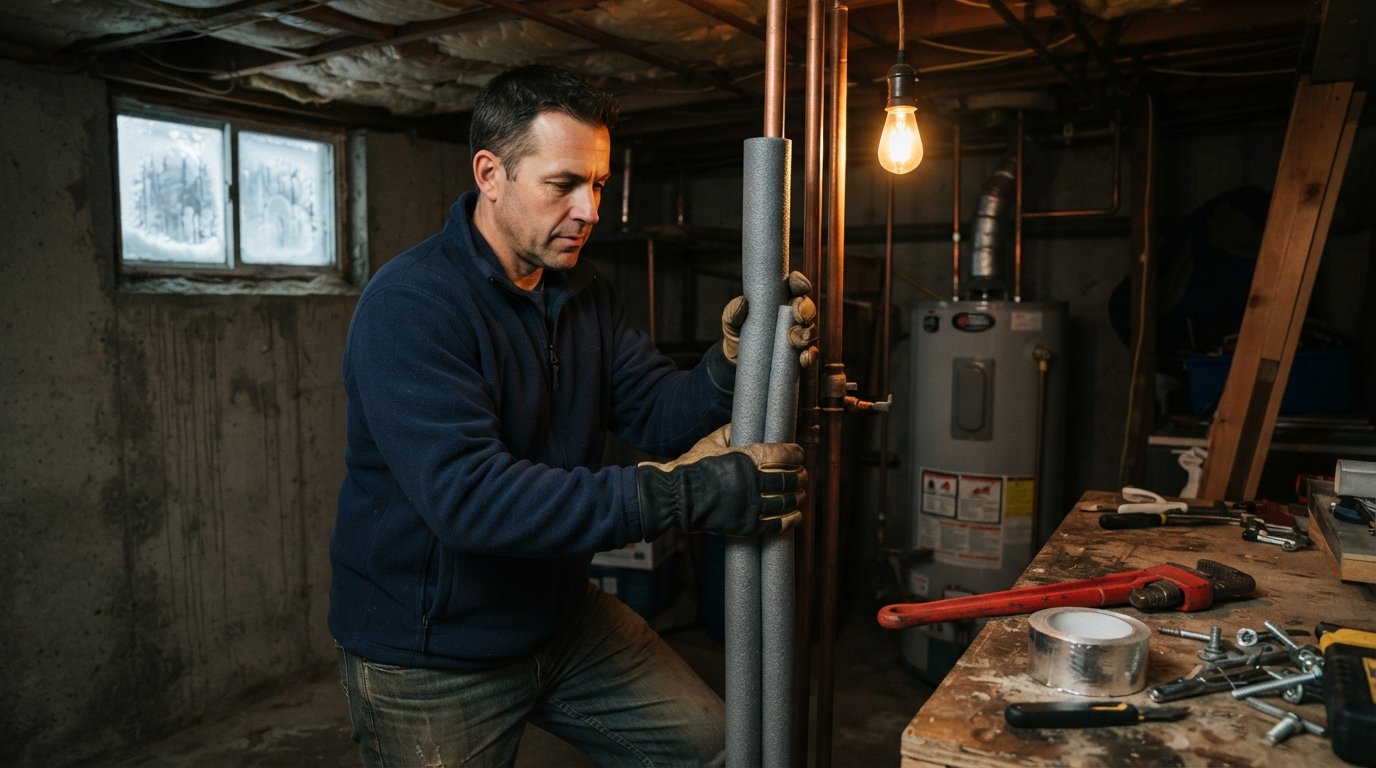
Pipe insulation is one of the cheapest and most effective defenses available. Foam pipe sleeves, sometimes called pipe noodles, cost just a few dollars per length and slide easily over exposed copper or plastic. For pipes in unconditioned spaces, wrap them with foam insulation and then seal the seams with tape. In especially cold crawl spaces or attics, add a layer of heat tape or a thermostatically controlled heating cable before insulating. The heating cable warms the pipe directly, and the insulation keeps that warmth from escaping into the cold air.
It is important to insulate correctly. Do not leave gaps at joints, elbows, or valves, because those gaps become cold spots where ice can form first. If you use heat tape, follow the manufacturer's instructions precisely and never overlap the cable on itself, which can cause overheating and a fire hazard. For homeowners who are not comfortable working around electrical heat tape or who have complex plumbing layouts, hiring a licensed plumber to assess and insulate vulnerable runs is a worthwhile investment. Platforms like FreeQuotes.Contractors can connect you with local plumbing and HVAC professionals who handle this kind of winterization work, often at no cost to request a quote.
Beyond pipe insulation, consider the spaces themselves. Sealing air leaks around foundations, rim joists, and attic penetrations keeps cold air from washing over plumbing. A tube of caulk and a can of spray foam can make a measurable difference in the temperature around your pipes. If a crawl space is consistently below freezing, a small space heater with a thermostat or a dedicated heat source may be necessary, but always follow safety guidelines and keep heaters away from combustible materials.
Adjust Thermostat Habits and Keep Heat Flowing
One of the most common mistakes homeowners make is lowering the thermostat too far at night or while away to save on heating bills. While energy savings are real, setting the temperature below about 55 degrees Fahrenheit in a home with exposed plumbing invites trouble. The better approach is to maintain a consistent minimum temperature, typically between 55 and 60 degrees, throughout the winter. This keeps the interior of walls and cabinets warm enough to protect the pipes behind them.
During extreme cold snaps, consider raising the thermostat a few degrees rather than lowering it. The small additional cost is trivial compared to the price of water damage remediation, which can easily run into five figures. If certain rooms feel cold, do not close off vents in those areas, because reduced airflow can let nearby pipes chill. Instead, keep interior doors open so warm air circulates freely through the house, especially doors to bathrooms, laundry rooms, and cabinets under sinks on exterior walls.
For homes with a crawl space or unfinished basement, check that any heating ducts serving those areas are open and unobstructed. If the space has no heat source at all, a licensed HVAC contractor can evaluate whether extending a duct or installing a small vent is feasible. This is also a good time to schedule routine furnace maintenance, since a mid-winter breakdown leaves your pipes exposed to whatever the weather brings.
Protect Outdoor Faucets, Sprinklers, and Pools
Outdoor plumbing is the first to freeze and often the easiest to protect. Before the first freeze, disconnect all garden hoses and store them indoors. A hose left connected traps water in the spigot and prevents it from draining, which almost guarantees a cracked valve. After disconnecting, shut off the interior valve that feeds the outdoor spigot if your home has one, then open the outdoor faucet to drain any remaining water. Leave the outdoor handle open through the winter so any residual moisture has room to expand without cracking the pipe.
For homes with in-ground irrigation systems, blow out the lines with compressed air before the season turns. This is a job best left to a professional with the right equipment, since trapped water in irrigation zones can crack manifolds and buried lines. Pool owners should follow their manufacturer's winterization checklist, which typically includes lowering water levels, draining equipment, and adding antifreeze to certain lines. These steps protect not just the pool but the plumbing that serves it.
Frost-free hose bibs are a worthwhile upgrade for homeowners in cold climates. These fixtures extend into the heated portion of the wall and drain automatically when the hose is removed, dramatically reducing freeze risk. A plumber can retrofit existing spigots with frost-free models in an afternoon. If you are unsure whether your outdoor fixtures are properly winterized, a quick inspection by a licensed plumber can catch problems before they become expensive repairs.
Prepare for Vacations and Extended Absences
Leaving a home unattended during winter multiplies freeze risk because no one is there to notice a drop in temperature or a slow leak. If you plan to travel, avoid setting the thermostat to a low temperature or turning the heat off entirely. Keep it at 55 degrees Fahrenheit or higher, and ask a neighbor or property manager to check the house periodically. A daily walk-through can catch a frozen pipe before it thaws and floods the home.
For longer absences, consider shutting off the main water supply and draining the system. Start by turning off the main valve, then open all faucets, both hot and cold, to let water drain. Flush toilets and add a small amount of antifreeze to toilet bowls and sink traps to prevent residual water from freezing. If your home has a water heater, follow the manufacturer's guidance on vacation settings, which often means switching to vacation mode or turning it down rather than off.
Smart home technology can add a layer of protection. Wi-Fi-enabled thermostats let you monitor and adjust temperature remotely, and water leak sensors placed near water heaters, washing machines, and under sinks can send alerts to your phone. Some systems can even shut off the main water supply automatically when a leak is detected, which can limit damage dramatically. These devices are not a substitute for proper insulation and heating, but they are valuable backup for homeowners who travel often.
What to Do If a Pipe Freezes Anyway
Despite your best efforts, a pipe may still freeze during an unusually severe cold snap. The first sign is often a faucet that produces only a trickle or nothing at all. If you suspect a freeze, keep the faucet open so that melting water has somewhere to go, and apply gentle heat to the suspected area using a hair dryer, a space heater, or warm towels. Never use an open flame, and never pour boiling water directly onto a frozen pipe, because the sudden temperature change can crack it.
Work from the faucet end of the pipe back toward the frozen section. As the ice melts, water will begin to flow, and you can gradually increase heat. If you cannot locate the frozen section, or if the pipe is inside a wall or slab, it is time to call a licensed plumber. Professionals have thermal imaging cameras and specialized thawing equipment that can resolve the problem safely without damaging your home. Attempting to thaw a walled-in pipe with improvised methods risks fire, electrical shock, and water damage.
If a pipe has already burst, shut off the main water supply immediately and call a plumber. Then contact your insurance company to report the damage. Most standard homeowners policies cover sudden and accidental water damage from burst pipes, but they may not cover damage caused by neglect, such as failing to heat a home during winter. Document everything with photos and keep receipts for emergency repairs. For non-emergency winterization projects like insulation upgrades or frost-free spigot installation, requesting quotes from vetted local contractors through a marketplace like FreeQuotes.Contractors can help you compare options and pricing before committing.
A Simple Winter Plumbing Checklist
To keep everything organized, run through a short checklist before the first hard freeze and again at the start of each cold snap. The following steps cover the highest-impact actions for most homes:
- Disconnect garden hoses, shut off interior spigot valves, and drain outdoor faucets.
- Insulate exposed pipes in basements, crawl spaces, attics, and garages, including elbows and valves.
- Seal air leaks around foundations, rim joists, and attic penetrations with caulk or spray foam.
- Set the thermostat to at least 55 degrees Fahrenheit and keep it there day and night.
- Open cabinet doors under sinks on exterior walls and keep interior doors open for airflow.
- Install water leak sensors near water heaters, washing machines, and under sinks.
- Arrange a professional inspection if you are unsure about vulnerable pipes or heating coverage.
Following this list takes a few hours at most, and much of it can be done in a single afternoon. The payoff is a winter free from the stress, expense, and disruption of water damage. Homeowners who want additional reassurance can schedule a winterization visit from a licensed plumber, who can identify problem areas specific to the home's layout and climate.
Preventing frozen pipes is ultimately about consistency and attention. Keep the heat on, keep the pipes insulated, and keep an eye on the forecast. When temperatures are forecast to drop well below freezing for several days, take a few extra minutes to verify that every vulnerable line is protected. A small amount of planning now can save thousands of dollars and weeks of repair work later, leaving you free to enjoy the season instead of mopping up after it.