
How to Compare Three Contractor Bids for the Same Project
Compare three contractor bids the right way and avoid surprise bills. Call (833)-700-4293 for help finding pre-vetted local pros.

Learn more about Exterior Painting for guides, costs, and what to expect.
Compare Exterior Painting Pros Near You

Enter your ZIP code to compare top-rated local professionals and request free quotes.
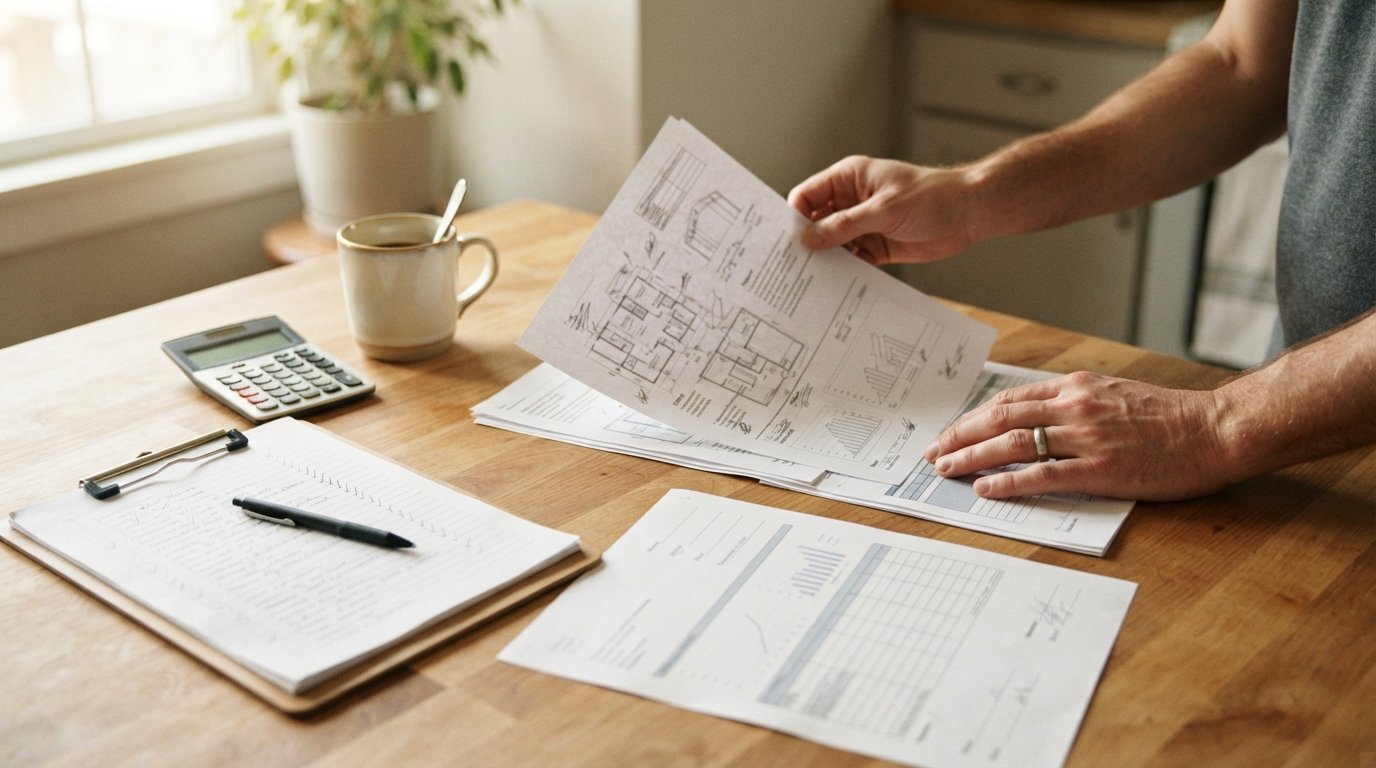
You have three contractor bids sitting on your kitchen table, and they look nothing alike. One is a single page with a lump sum, another runs eight pages with line items you barely understand, and the third is somewhere in between. Comparing them feels like comparing apples to oranges, and the temptation is to simply pick the lowest number. That approach is one of the most common and costly mistakes homeowners make. A low bid often signals missing scope, not a bargain.
The good news is that comparing three bids fairly is a skill, not a mystery. You need a consistent method that forces every bid onto the same playing field so you can see what is included, what is excluded, and what the real price of the project will be. This guide walks you through building a comparison sheet, spotting hidden gaps, asking the right follow-up questions, and making a decision you can defend. The process takes a couple of hours, and it can save you thousands of dollars and months of frustration.
Start With a Scope Document, Not the Bids
Before you open any bid, write down exactly what you want done. This sounds obvious, but most homeowners skip it, and that is why bids come back looking so different. Each contractor interpreted your verbal description in their own way. A written scope, even a simple one, gives every bidder the same target and gives you a reference point when comparing numbers.
Your scope document should list the rooms or areas involved, the work you expect (remove and replace, repair only, add new), the materials you have in mind or want options for, and any known constraints like access issues, permits, or a tight timeline. If you are unsure about materials, say so and ask each contractor to propose options with pricing. That single instruction will make the bids far easier to compare because each one will show you what they intend to install.
For a deeper look at what a well-built bid should contain, read our guide on how contractor bids should be structured. It explains the line items, allowances, and exclusions that separate a professional estimate from a vague guess. Use that structure as your checklist when you review each of the three bids.
Build a Line-by-Line Comparison Sheet
The most reliable way to compare three contractor bids for the same project is to force them into a single spreadsheet or table. Do not compare the bids side by side as documents. Instead, create rows for each work category and columns for each contractor. This layout exposes gaps instantly.
Here is a practical structure you can copy into a spreadsheet:
- Scope item: demolition, framing, rough-in, finish work, cleanup
- Materials specified: brand, grade, model, quantity
- Labor included: yes or no, and any subcontracted trades
- Permits and inspections: who pulls them, who pays
- Exclusions: what the bid explicitly does not cover
- Allowances: dollar amounts for items not yet selected
- Timeline: start date, duration, milestones
- Payment schedule: deposit, progress payments, final payment
- Warranty: workmanship and product coverage
- Total price: base bid plus allowances plus projected extras
Fill in one row at a time for all three contractors. When a cell is blank, that is a red flag, not a neutral detail. A missing line for disposal, for example, usually means you will pay for it later or the contractor will add it as a change order. The comparison sheet turns vague unease into specific questions you can ask before signing anything.
Pay special attention to the materials column. One bid may specify a mid-grade shingle while another lists a premium product, which explains a price gap that looks arbitrary at first glance. If a bid says "standard fixtures" or "builder-grade materials," ask for the exact model numbers. You cannot compare quality without knowing what is being installed.
Spot the Bids That Omit Permits, Cleanup, or Disposal
Three bids for the same project often differ by thousands of dollars because of items that never appear on the page. Permits, cleanup, and disposal are the three most commonly omitted costs, and they are also the three most likely to come back as surprise charges.
Permits matter more than most homeowners realize. A contractor who skips the permit may be cheaper, but the work could fail inspection, complicate a future sale, or leave you responsible for code violations. Ask each bidder directly: will you pull the permit, and is the permit fee included in this number? Get the answer in writing. If one bid is silent on permits, assume it is excluded until proven otherwise.
Cleanup and disposal follow the same pattern. Demolition debris, old appliances, packaging, and leftover materials all cost money to remove. A bid that does not mention haul-away is either planning to leave the mess for you or planning to bill you later. The same goes for final cleaning, protective coverings for floors and furniture, and dust control. These are not glamorous line items, but they are real costs that separate a complete bid from an incomplete one.
Here is a quick checklist of frequently omitted items to verify in every bid:
- Building permit and inspection fees
- Debris removal and dumpster rental
- Final cleaning and site protection
- Sales tax on materials and labor where applicable
- Temporary utilities, toilets, or fencing
- Repair of adjacent surfaces disturbed during the work
When you find an omission, do not automatically eliminate the bidder. Instead, ask them to revise the bid to include the item. A revised bid tells you two things: the real price and whether the contractor is responsive. A contractor who answers promptly and updates the scope in writing is demonstrating exactly the communication style you want during the project.
Why the Lowest Bid Is Often Incomplete, Not Cheap
The lowest of three bids feels like the obvious winner, which is precisely why it deserves the most scrutiny. In most cases, a bid comes in low because something is missing: a cheaper material grade, an excluded permit, a skipped step in the process, or labor that will be subcontracted to the lowest available crew. The number is real, but it is not the price of the same project the other two bidders quoted.
Consider a simple example. Three bids for a bathroom remodel come in at 14,000 dollars, 18,500 dollars, and 21,000 dollars. The 14,000 dollar bid lists demolition, tile, and fixtures but says nothing about waterproofing, permits, or disposal. Once you add those items, the revised bid lands near 18,000 dollars. The gap between the low bid and the middle bid was never about efficiency. It was about scope.
There is also a risk beyond price. A contractor who wins by cutting corners may cut them during construction, using thinner materials, skipping inspection steps, or rushing prep work that determines how long the finished product lasts. The cheapest bid is not automatically a bad contractor, but it is a bid that requires the most questions. Compare the scope first, then compare the adjusted totals. The lowest adjusted total is the only meaningful low bid.
Normalize the Numbers Before You Decide
Once your comparison sheet is filled in, adjust each bid to reflect the same scope. Add the cost of missing permits, disposal, and cleanup. Replace vague allowances with realistic estimates or ask the contractor to firm them up. If one bid includes a premium material and another includes a standard grade, either ask for an upgraded quote or compare the bids using the same specification.
This normalization step is where most homeowners discover the bids are closer than they appeared. It is also where genuinely efficient contractors stand out. A bid that is complete, specific, and still competitive after adjustments is a strong signal of a professional operation. One practical way to gather additional bids for comparison is to use a platform like FreeQuotes.Contractors, which connects homeowners with pre-vetted local contractors and lets you request multiple quotes for the same written scope. Comparing a fourth or fifth bid against your sheet can confirm whether your three original numbers were in line with the local market.
Watch for allowances in particular. An allowance is a placeholder dollar amount for an item not yet chosen, such as tile or light fixtures. A low allowance makes a bid look cheaper than it will actually be. Ask each contractor how the allowance was set and what happens if you choose an item that costs more. A realistic allowance is better than a low one, even if it raises the headline number.
Questions to Ask Before Eliminating a Bidder
Do not eliminate a bidder based on price alone. Give each contractor a chance to clarify, revise, or justify their number. The answers will tell you as much about how they work as the bid itself. Ask the same questions of all three so the comparison remains fair.
Start with scope and assumptions. Ask what the bid assumes about site conditions, access, and existing damage. Then move to logistics: who pulls the permit, who handles inspections, who is on site each day, and how change orders are priced. Finally, ask about warranty and payment. A contractor who requires a large deposit before work begins and offers no written workmanship warranty is a risk regardless of price.
Use this short list as your script:
- Is this bid complete for the scope I provided, and what is excluded?
- Will you pull the permit, and is the fee included?
- Who is the crew, and will any work be subcontracted?
- How do you price change orders, and what is the markup?
- What does your workmanship warranty cover, and for how long?
- Can you provide two recent references for similar projects?
After the calls, update your comparison sheet with the new information. A bidder who answers clearly and revises in writing moves up. A bidder who is evasive about permits, exclusions, or warranties moves down, even if the number is attractive. Communication during the bidding phase is a preview of communication during construction.
Weigh Value, Timeline, and Track Record
Price is one axis of a three-dimensional decision. The other two are timeline and track record. A slightly higher bid from a contractor with strong references and a realistic schedule is often the better value than the lowest bid from an unknown crew with a start date that keeps slipping. Your comparison sheet should capture all three so the decision is not driven by a single column.
Check references with specific questions. Ask whether the project finished on time, whether the final price matched the bid, and whether the contractor communicated well when problems came up. Every project has surprises. What matters is how the contractor handles them. A reference who says the contractor flagged an issue early and priced the fix fairly is worth more than a reference who simply says the work looks nice.
Timeline deserves the same scrutiny. Compare start dates, durations, and dependencies such as permit approval or material lead times. A bid that promises an unrealistically fast schedule may be cutting corners or overbooking. A bid that is transparent about sequencing and weather risk is usually more trustworthy. Factor schedule into your decision, especially if the project affects a kitchen, bathroom, or roof you depend on daily.
Make the Decision and Document It
When you have normalized the numbers, asked the questions, and checked the references, the choice usually becomes clear. Pick the bid that offers the best combination of complete scope, fair price, credible timeline, and responsive communication. Then document the final agreement in writing, including the scope, materials, payment schedule, change order process, and warranty. The bid you compared should become the contract you sign, with any revisions attached.
Keep your comparison sheet. It is a useful record if a dispute arises later or if you plan another project. Homeowners who compare bids systematically tend to get fewer surprise bills, better communication, and work that holds up. The effort you put into comparing three bids carefully is small compared with the cost of choosing wrong.
If you are still gathering bids or want to test your three quotes against the local market, request additional free quotes for the same written scope and run them through the same comparison process. The more consistent your method, the more confident your final decision will be.
Learn more about Exterior Painting for guides, costs, and what to expect.
Compare Exterior Painting Pros Near You
Enter your ZIP code to compare top-rated local professionals and request free quotes.