
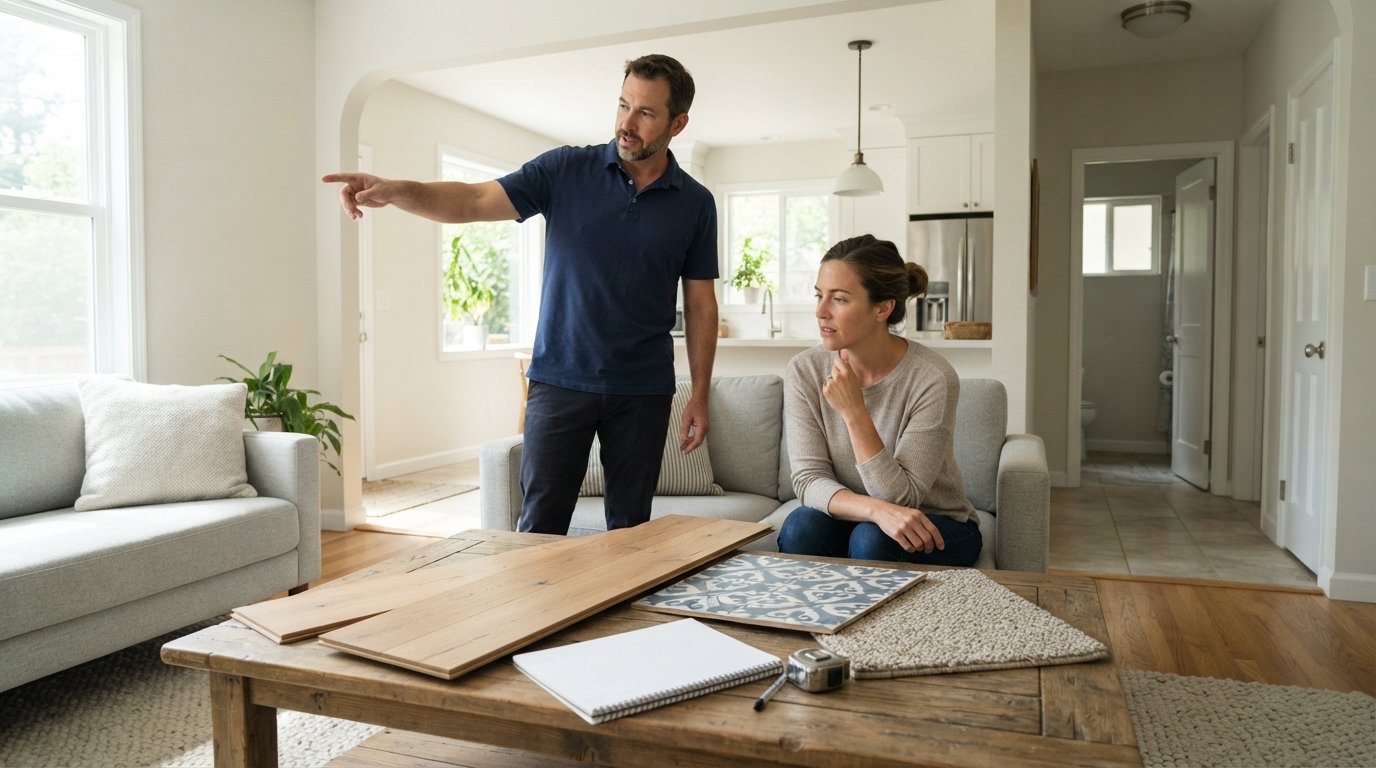
How to Choose the Right Flooring for Every Room
Choosing the right flooring for each room starts with matching material to moisture and traffic. Call (833)-700-4293 for vetted local pros and free quotes.

By Julia Dawson
Learn more about Floor Installation or Replacement for guides, costs, and what to expect.
Compare Floor Installation or Replacement Pros Near You

Enter your ZIP code to compare top-rated local professionals and request free quotes.
Flooring is one of the few design decisions that touches every single room in your home, and it is also one of the most expensive. According to national remodeling data, flooring replacement consistently ranks among the top five interior upgrade projects homeowners tackle each year, often costing anywhere from a few thousand dollars for a single room to well over twenty thousand for an entire house. That kind of investment deserves more thought than a quick trip to a big box store. The right choice depends on moisture, foot traffic, pets, budget, and the style you want to live with for the next decade or more. Get it right, and every room feels intentional. Get it wrong, and you may find yourself replacing swollen planks or stained carpet far sooner than expected.
Start With the Room, Not the Material
Most homeowners begin the flooring search by falling in love with a specific material: wide plank white oak, perhaps, or a bold patterned tile. That is a natural instinct, but it usually leads to regret. A better approach is to start with the room itself and work backward to the material. Every space in your home has a distinct set of conditions, and those conditions should drive the decision.
Ask yourself four questions about each room before you shop:
- How much moisture does this room see? Bathrooms, kitchens, laundry rooms, and basements are wet zones. Bedrooms and living rooms are dry.
- How much foot traffic does it get? An entryway or family room may see dozens of trips per day, while a guest bedroom may see a handful per week.
- Who uses it? Pets, toddlers, and aging family members all have different needs around scratch resistance, slip resistance, and cushioning.
- What is the subfloor situation? Concrete slabs, plywood, and older plank subfloors each limit which materials can be installed without extra prep work.
Once you have honest answers, the shortlist of viable materials shrinks dramatically. That is a good thing. It saves you from agonizing over options that were never going to work in the first place.
Know the Core Flooring Categories
Before matching materials to rooms, it helps to understand what each major category actually is and how it behaves. There are six families of flooring that dominate residential projects in the United States, and each has a distinct personality.
Hardwood is the gold standard for warmth and resale value. Solid hardwood is milled from a single piece of wood and can be sanded and refinished multiple times over its lifespan. Engineered hardwood uses a plywood core topped with a real wood veneer, which makes it more stable in humid climates. Both feel luxurious underfoot, but both are vulnerable to standing water and scratches from pet claws.
Laminate is a photographic image of wood or stone sealed under a clear wear layer, bonded to a dense fiberboard core. It is tough, affordable, and easy to clean, but it cannot be refinished and it swells if water seeps into the seams. Modern laminate has come a long way in realism, and it remains one of the best budget options for high traffic areas.
Luxury vinyl plank (LVP) and tile (LVT) are the fastest growing category in the country, and for good reason. These products are waterproof, comfortable underfoot, and available in convincing wood and stone looks. Rigid core versions click together without glue and can often be installed directly over existing hard surfaces.
Tile, whether ceramic or porcelain, is the traditional choice for wet rooms. Porcelain is denser and less porous, making it ideal for bathrooms and mudrooms. Natural stone tile (marble, travertine, slate) offers unmatched beauty but requires sealing and more careful maintenance.
Carpet remains the leader in bedrooms because of its softness, warmth, and sound absorption. Modern stain-resistant fibers have made it far more durable than the carpets of a generation ago, though it still stains and wears in high traffic paths.
Natural stone and concrete round out the list, offering unique textures for entries, patios, and industrial style interiors. They are heavy, cold, and require professional installation in most cases.
Matching Materials to Specific Rooms
Now the fun part: pairing each category with the rooms where it shines. The following guidance reflects how professional installers and designers typically approach a whole home flooring plan.
Living Rooms and Family Rooms
These are the gathering spaces, so comfort, durability, and visual warmth all matter. Hardwood or high quality engineered hardwood is the classic choice, and it typically adds the most resale value of any flooring option. If you have pets or young children and want the wood look without the worry, LVP is an excellent substitute. It handles spills, scratches, and traffic better than real wood at roughly half the cost. Carpet can work in a formal living room, but in a busy family room it tends to show wear paths quickly.
Kitchens
Kitchens combine water, grease, dropped knives, and constant foot traffic. Porcelain tile has long been the go-to because it handles all of that without complaint. LVP is now equally popular because it is softer underfoot during long cooking sessions and easier on dropped dishes. Solid hardwood in a kitchen is risky unless you are meticulous about wiping up spills; engineered hardwood or a water resistant laminate is a safer way to get the wood look. Avoid carpet in kitchens entirely.
Bathrooms
Bathrooms are the most moisture heavy rooms in the house. Porcelain or ceramic tile remains the safest bet because it is impervious to water and easy to sanitize. LVT designed for wet areas is a strong second choice and feels warmer underfoot. Natural stone tile looks stunning but must be sealed regularly. Avoid solid hardwood and standard laminate in bathrooms. If you want the look of wood, choose a wood-look porcelain tile that will never swell or warp.
Bedrooms
Bedrooms are dry, low traffic, and personal. Carpet is still the most popular choice because it is soft, quiet, and warm on bare feet in the morning. If allergies are a concern, hardwood, engineered wood, or LVP with area rugs gives you the same coziness with easier cleaning. Bamboo and cork are also worth considering for their sustainability and natural cushioning.
Basements
Basements sit below grade, which means they are prone to humidity, minor flooding, and cool temperatures. Waterproof materials are non negotiable here. LVP with a rigid core, porcelain tile, and epoxy coated concrete are the three safest options. Traditional hardwood and laminate will buckle if the basement ever takes on water. If you want carpet, choose a moisture resistant carpet tile that can be lifted and dried after a leak.
Hallways and Entryways
These are the highest traffic zones in any home. They also tend to be narrow, so flooring that runs the length of the hall makes the space feel larger. Porcelain tile, LVP, and engineered hardwood all perform well. Avoid light colored carpet in entryways, where dirt and grit will show within weeks.
Weighing Budget, Lifespan, and Resale Value
Cost is usually the deciding factor, but the sticker price per square foot only tells part of the story. What really matters is cost per year of service. A material that costs eight dollars per square foot and lasts thirty years is often a better deal than one that costs four dollars and needs replacing in eight years.
As a general rule of thumb, expect the following installed cost ranges in most U.S. markets:
- Carpet: two to six dollars per square foot installed, with a lifespan of eight to fifteen years.
- Laminate: three to eight dollars per square foot, with a lifespan of ten to twenty years.
- Luxury vinyl plank: four to ten dollars per square foot, with a lifespan of fifteen to twenty five years.
- Engineered hardwood: six to twelve dollars per square foot, with a lifespan of twenty to thirty years.
- Porcelain tile: seven to fifteen dollars per square foot, with a lifespan of thirty to fifty years.
- Solid hardwood: eight to fifteen dollars per square foot, with a lifespan of fifty years or more when properly maintained.
Resale value matters too, especially if you plan to sell within a few years. Real estate agents consistently report that hardwood and high quality wood look flooring are the strongest selling points in listing photos. Carpet in main living areas can actually hurt a listing, while carpet in bedrooms is generally neutral. Tile in bathrooms and kitchens is expected and rarely counts against a home.
Do Not Overlook Installation and Subfloor Reality
The best material in the world will fail if it is installed over the wrong subfloor or in the wrong environment. Before you commit to a product, have a professional evaluate the substrate. Concrete slabs need moisture testing. Older homes may have uneven plank subfloors that require an underlayment panel. Radiant heated floors, which are increasingly common, work well with tile and engineered wood but can damage solid hardwood.
Installation method also affects cost and longevity. Glue down, floating, nail down, and mortar set each have trade offs. Floating floors are faster and cheaper to install but can feel hollow underfoot. Glue down and nail down installations are more permanent and typically quieter. For any room where moisture is a concern, the underlayment and vapor barrier matter as much as the flooring itself.
This is where working with a vetted professional pays off. A qualified flooring contractor can inspect your subfloor, recommend the right underlayment, and flag issues like slab cracks or moisture intrusion before they become expensive problems. If you are planning a multi room flooring project and want to compare bids from local pros, FreeQuotes.Contractors connects homeowners with pre-vetted flooring specialists who can provide free, competitive quotes.
Design and Continuity Considerations
Flooring is not just a practical decision. It is also the visual foundation of your home. A few design principles can keep a multi room project looking cohesive rather than choppy.
First, limit yourself to two or three flooring materials across the entire home. A common and elegant approach is hardwood or wood look flooring in all the main living spaces, tile in bathrooms and the laundry room, and carpet in the bedrooms. This creates a clear visual hierarchy without feeling random.
Second, think about transitions. Where two materials meet, a simple T molding or a flush reducer keeps the line clean. Avoid abrupt changes in the middle of an open floor plan, because they break the sense of flow.
Third, consider color and tone. Lighter floors make small rooms feel bigger and hide dust better. Darker floors feel dramatic and formal but show scratches and footprints more readily. Warm tones pair well with traditional furniture, while cool grays and whites suit modern interiors.
A Simple Step by Step Decision Framework
If you are feeling overwhelmed by the options, use this sequence to make the decision manageable:
- List every room you plan to refloor and note its moisture level, traffic level, and subfloor type.
- Set a realistic total budget, then divide it by room based on priority (living areas first, guest rooms last).
- Shortlist two or three materials that fit the conditions in each room.
- Order samples and live with them for a week in each space, checking them in daylight and at night.
- Get at least three written quotes from local flooring contractors, including prep work, removal, and disposal.
- Confirm warranty terms, installation timeline, and who handles unexpected subfloor repairs.
Following this process keeps you from making an emotional purchase and helps you compare bids on equal footing. It also gives you a paper trail if something goes wrong during installation.
When to Call a Professional
Some flooring projects are genuinely DIY friendly: a small laminate or LVP room over a flat, dry subfloor is a reasonable weekend project for a confident homeowner. But most whole home flooring jobs, and nearly all tile, hardwood, and moisture sensitive installations, are better left to professionals. The stakes are high. A poorly installed floor can cup, buckle, or crack within a single season, and correcting it costs more than doing it right the first time.
A qualified contractor brings moisture testing equipment, subfloor leveling expertise, and the right tools for clean cuts and tight seams. They also carry insurance and can stand behind their work with a warranty. When you are choosing between bids, do not simply pick the lowest number. Look for detailed scopes of work, clear timelines, and references you can actually call.
Choosing the right flooring for each room comes down to matching material performance to the real conditions of your home, then backing that decision with professional installation. Take the time to evaluate moisture, traffic, budget, and style room by room, and you will end up with floors that look beautiful, wear well, and add lasting value to your home for years to come.