
Fall Home Maintenance Checklist Before Winter Hits
Work through this fall home maintenance checklist before winter to prevent frozen pipes, ice dams, and furnace failures. Call (833)-700-4293 for vetted local pros.

By Olivia Shaw
Learn more about Home Inspection for guides, costs, and what to expect.
Compare Home Inspection Pros Near You

Enter your ZIP code to compare top-rated local professionals and request free quotes.
Your home survived summer heat, thunderstorms, and maybe a few hailstorms. But the real test starts when temperatures drop. A single missed step in fall maintenance can turn into a burst pipe, an ice dam, or a furnace failure in the dead of January, and those emergencies never come with a convenient price tag. The good news is that most cold-weather damage is preventable with a focused weekend of work and a few smart phone calls. This fall home maintenance checklist before winter walks you through exactly what to inspect, what to seal, what to drain, and when to hand the job to a licensed pro instead of your own toolbox.
Start With Gutters, Roof, and Drainage Before the First Freeze
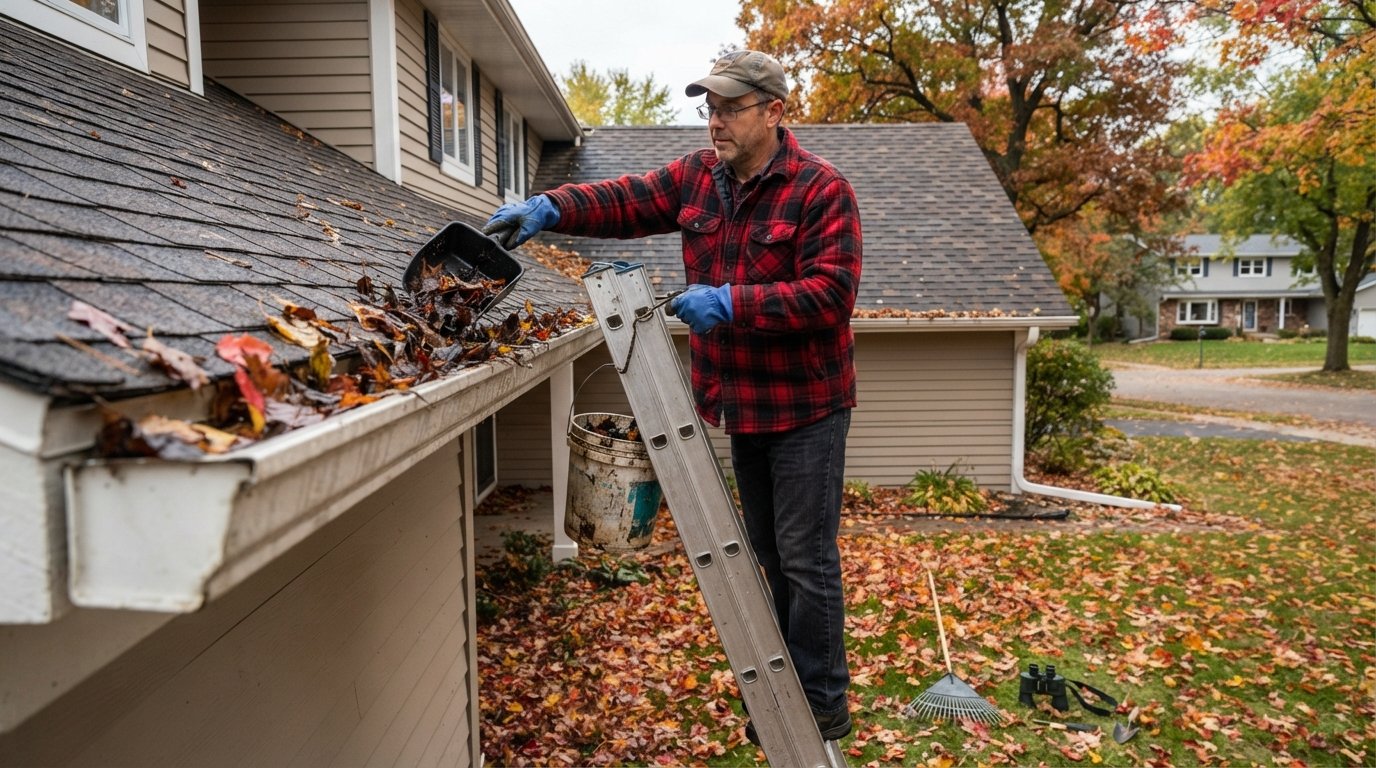
Water is your home's most persistent enemy, and fall is when it gets its best chance to sneak in. Clogged gutters overflow at the roofline, sending water down behind fascia boards and into foundation walls. Once that moisture freezes and expands, small cracks become big repairs. Before the first hard freeze, clear every gutter and downspout of leaves, twigs, and shingle grit. While you are up there (or watching from the ground), check that downspouts discharge at least four to six feet away from the foundation and that the ground slopes away from the house.
The roof itself deserves a close look. Scan for lifted, cracked, or missing shingles, worn flashing around chimneys and vents, and any rusted nails or dark stains that suggest moisture. If you are not comfortable on a ladder, use binoculars from the ground or ask a professional for a quick inspection. Pay special attention to valleys and low-slope sections where snow tends to accumulate and ice dams form. A small roofing repair in October is far cheaper than a ceiling replacement in February.
Drainage is the third leg of this water-management stool. Test your sump pump by pouring a bucket of water into the pit and confirming it kicks on and shuts off properly. Clean any debris from window wells, and make sure the grading around your foundation has not settled into a bowl shape that traps water. If your basement has flooded before, fall is the time to add a backup battery to the sump pump or improve exterior drainage, not the night before a storm. For a broader seasonal rhythm that covers spring and summer too, see this seasonal home maintenance checklist for homeowners.
Heating System Tune-Up and Filter Changes
Your furnace or heat pump has been idle for months, and the first cold snap is the worst possible time to discover it has a problem. Schedule a professional HVAC tune-up before you need the heat. A technician will clean the burners, check the heat exchanger for cracks, test the blower motor, verify refrigerant levels on heat pumps, and confirm the system is running safely. Carbon monoxide leaks and cracked heat exchangers are serious health hazards, and a fall inspection is the standard defense against them.
Filters are the DIY part of this equation, and they matter more than most homeowners realize. A clogged filter forces the blower to work harder, drives up energy bills, and can shorten the life of your system. Change standard filters every one to three months during heating season, or more often if you have pets or allergies. If you use a high-efficiency pleated filter, check it monthly and replace it when it looks gray and matted. Write the date on the filter frame with a marker so you never have to guess.
While you are thinking about heat, test your smoke and carbon monoxide detectors and replace the batteries. This is also a good moment to check that heating vents and returns are not blocked by furniture, rugs, or curtains. If your system is older than 15 years or has needed repeated repairs, a fall tune-up is the right time to ask whether replacement makes more sense than another season of patchwork. You can compare local HVAC options and request free quotes through FreeQuotes.Contractors to see what a new system would cost before winter pricing climbs.
Seal Gaps Around Windows, Doors, and Exterior Penetrations
Air leaks are silent budget killers. A quarter-inch gap under a door or around a window frame can let in enough cold air to make a room uncomfortable and force your heating system to run longer. Walk the perimeter of your home on a cool, windy day and feel for drafts around window frames, door thresholds, electrical outlets on exterior walls, dryer vents, and pipes that penetrate siding. Even small gaps add up across an entire house.
Weatherstripping and door sweeps are inexpensive and easy to install. For window frames, use caulk rated for exterior use and apply it to clean, dry surfaces. Foam gaskets behind switch plates on exterior walls are a five-minute fix that pays for itself quickly. Larger gaps around pipes and vents can be filled with expanding foam, but be careful not to overfill, since the foam expands significantly. If you find significant gaps around window frames or suspect the windows themselves are failing (condensation between panes, difficulty latching, visible rot), it may be time for professional window replacement rather than another season of caulk.
Do not forget the attic and basement. Seal gaps around attic hatches, recessed lights, and plumbing penetrations, and add weatherstripping to basement doors. These areas are often overlooked, yet they account for a surprising share of heat loss. If you are unsure whether your windows or doors are beyond sealing, a contractor can tell you in minutes whether repair or replacement is the smarter investment.
Outdoor Faucet and Irrigation Winterization
Frozen water expands with enormous force, and the pipes most vulnerable to that force are the ones feeding outdoor faucets and irrigation systems. Before the first freeze, disconnect all garden hoses and drain them. Shut off the interior valve that supplies outdoor faucets if your home has one, then open the outdoor spigot to let any remaining water drain out. If you have a frost-proof faucet, remove the vacuum breaker or hose adapter so water can escape.
Irrigation systems need a proper blowout using compressed air, and this is a job best left to a professional. Doing it wrong can damage valves, backflow preventers, and underground lines, and repairs cost far more than the service call. Schedule the blowout before temperatures consistently drop below freezing, since irrigation companies book up fast in late fall. While you are at it, drain and store hoses, shut off and drain decorative water features, and disconnect any exterior water lines to sheds or garages.
Indoors, insulate exposed pipes in unheated areas such as crawl spaces, garages, and attics. A few dollars of foam pipe insulation can prevent a burst pipe that would cost thousands to repair. If you plan to travel during winter, leave cabinet doors open under sinks on exterior walls and set the thermostat no lower than 55 degrees Fahrenheit. These small habits are the difference between a peaceful winter and a frantic call to an emergency plumber.
Which Tasks Are DIY-Safe and Which Need a Pro
Not every fall maintenance task belongs on your weekend list. Some jobs are genuinely safe and satisfying to handle yourself, while others involve real risk to your safety, your home's structure, or your wallet if something goes wrong. Use this quick guide to sort your to-do list:
- DIY-safe: Changing HVAC filters, testing smoke and CO detectors, sealing small gaps with caulk or weatherstripping, draining garden hoses, cleaning gutters from the ground with a long-reach tool, and insulating exposed pipes.
- Pro recommended: Roof inspections and repairs, HVAC tune-ups and any work involving refrigerant or gas lines, irrigation blowouts, chimney sweeping and inspection, and window replacement when seals or frames have failed.
- Never DIY: Electrical work beyond replacing a light bulb, gas line repairs, and anything that requires climbing onto a steep or high roof without fall protection.
The pattern is simple: anything involving heights, gas, refrigerant, or the structural envelope of your home is worth a professional's time. The cost of a tune-up or inspection is almost always less than the cost of the emergency it prevents. When you are ready to line up help, request free quotes from pre-vetted local contractors so you can compare prices and availability before the fall rush. For more guidance on choosing the right professional for each job, the team at Contractor.Homes has you covered.
Build a Fall Maintenance Schedule That Actually Works
The most common reason fall maintenance gets skipped is not laziness; it is timing. Homeowners wait until the first cold forecast, and by then every HVAC technician and gutter cleaner in town is booked solid. Beat the rush by splitting your checklist into two phases. Phase one, in early fall, covers gutters, roof inspection, drainage, and sealing air leaks while the weather is still mild. Phase two, timed for the first hard freeze warning, covers faucet draining, irrigation blowouts, and final heating checks.
Put the tasks on your calendar with specific dates rather than vague intentions. A simple spreadsheet or even a paper list on the fridge works fine. Note which tasks you handled yourself and which required a contractor, along with receipts and warranty information. Next fall, you will know exactly what to repeat and what to skip.
Finally, think of fall maintenance as an investment rather than a chore. The average homeowner spends a few hundred dollars on preventive work each autumn, and that spending routinely prevents repairs that cost ten times as much. Sealed gaps lower heating bills, a tuned furnace runs more efficiently, and clear gutters protect the foundation and roof. Your home rewards attention, and fall is the season when that attention matters most. Get the checklist done before the first freeze, and you can spend winter enjoying your home instead of repairing it.