
Energy Saving Upgrades for Older Houses: A Smart Guide
Energy saving home improvements for older houses preserve charm while cutting bills. Call (833)-700-4293 to compare local experts.

By Maya Bennett
Learn more about Exterior Painting for guides, costs, and what to expect.
Compare Exterior Painting Pros Near You

Enter your ZIP code to compare top-rated local professionals and request free quotes.
If you own an older house, you already know its charm: the solid wood doors, the original moldings, the plaster walls that have stood for generations. But that charm often comes with a hidden cost. Drafty rooms, high utility bills, and uncomfortable temperature swings are common complaints among owners of pre-1950s housing stock. The good news is that you do not have to sacrifice character to achieve comfort and efficiency. With the right approach, energy saving home improvements for older houses can preserve original features while dramatically reducing waste.
The key is understanding that older homes behave differently from new construction. They were built before modern air-sealing standards, and their materials and systems require specialized handling. A blanket approach that works for a 1990s subdivision may actually damage your 1920s bungalow. This guide walks you through the most effective strategies, from air sealing to window treatments, with a focus on protecting the architectural details that make your home unique.
Why Older Homes Leak Air Differently
New homes are built with a continuous air barrier, a system of house wrap, taped sheathing, and sealed penetrations that keeps conditioned air inside. Older homes, by contrast, were built as a collection of separate components. The framing, sheathing, and interior finishes were assembled without a holistic air barrier. Over time, gaps develop at every joint: between the foundation and sill plate, around window frames, at electrical outlets, and along the top plate where the wall meets the attic. These gaps act as tiny chimneys, allowing warm air to escape in winter and hot air to infiltrate in summer.
This stack effect is more pronounced in older homes because they often have balloon framing, where wall cavities run continuously from the basement to the attic. That creates a direct pathway for air to travel. In addition, many older homes have uninsulated or poorly insulated wall cavities, and the materials used, such as wood lath and plaster, are not airtight. The result is a house that leaks air at a rate far higher than a modern equivalent.
Understanding these differences is critical because it changes where you focus your efforts. Instead of simply adding insulation, you need to address air sealing first. Otherwise, you risk trapping moisture or creating condensation problems. For homeowners planning energy saving home improvements for older houses, the first step is always a thorough air leakage assessment, often performed by a professional energy auditor.
Insulation Options That Protect Knob-and-Tube Wiring and Plaster Walls
Insulation is one of the most cost-effective ways to improve energy efficiency, but older homes present unique challenges. Two common features, knob-and-tube wiring and plaster walls, require careful planning. Knob-and-tube wiring was common before 1950 and consists of ceramic knobs and tubes that hold wires apart. The wires are often brittle and lack a ground conductor. If you blow insulation over them, you can create a fire hazard because the insulation may trap heat, and the wiring is not designed to be covered. Similarly, plaster walls are thicker and denser than drywall, and they can crack if insulation is installed improperly.
Before adding insulation, have an electrician inspect the wiring. In many cases, knob-and-tube wiring is no longer active, but you must confirm this. If it is active, you may need to upgrade the wiring in the areas you plan to insulate, or choose an insulation method that does not cover the wires. For walls, dense-pack cellulose is often a good choice because it can be blown into cavities without removing plaster, and it does not put excessive pressure on the walls. However, the installer must be experienced with older homes to avoid cracking the plaster.
Here are some insulation strategies that work well for older houses:
- Attic insulation: Adding loose-fill cellulose or fiberglass to the attic floor is usually safe and effective, but first seal air leaks around penetrations and ensure proper ventilation.
- Wall insulation: Dense-pack cellulose or injection foam can be added to wall cavities, but only after confirming wiring safety and using low-pressure techniques to protect plaster.
- Basement and crawlspace: Insulating the rim joist and foundation walls with rigid foam or spray foam can reduce drafts, but moisture management is essential.
- Duct insulation: If you have forced-air heating, insulating ducts in unconditioned spaces can prevent significant energy loss.
Each of these options should be tailored to your home's specific construction. A contractor experienced with pre-1950 housing stock will know how to assess risks and choose the right materials.
Window Strategies for Historic Homes That Avoid Full Replacement
Original windows are a defining feature of many older homes, and replacing them with modern vinyl units can destroy curb appeal and historic character. Fortunately, you do not need to replace windows to improve energy efficiency. There are several strategies that preserve original windows while reducing air leakage and heat loss.
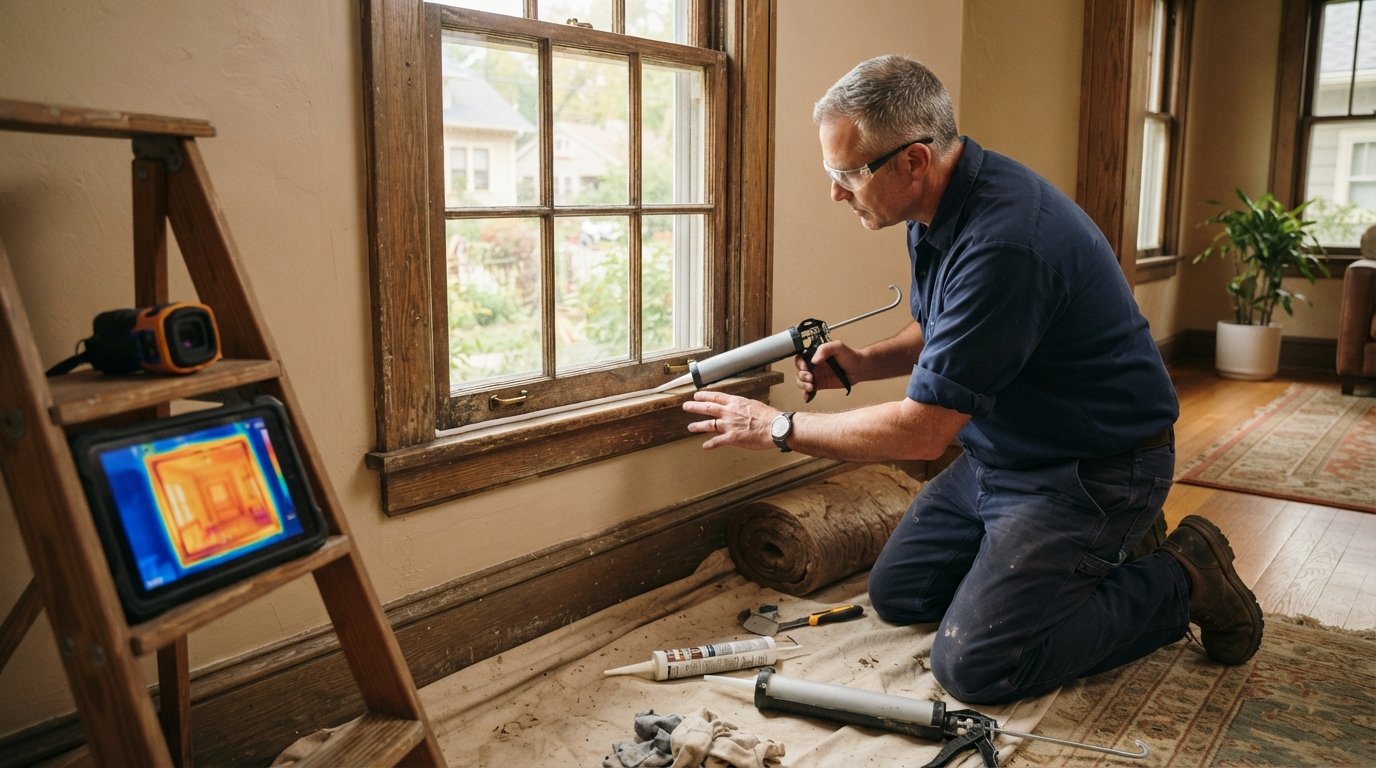
The first step is weatherstripping and caulking. Gaps around window frames and sashes allow air to infiltrate. Applying weatherstripping to the sash and frame, and caulking around the exterior trim, can significantly reduce drafts. For double-hung windows, adding a sash lock that pulls the sashes together tightly can also help. If the windows are loose in their frames, you can install spring bronze weatherstripping, which is durable and effective.
Another option is interior storm windows. These are removable panels that attach to the interior of the window frame, creating a dead air space that improves insulation. They are less expensive than full replacement and allow you to keep the original windows. Exterior storm windows are also an option, but they must be approved if your home is in a historic district. For homes with single-pane glass, applying a low-e film can reduce heat gain in summer and heat loss in winter, though it may not be appropriate for all window types.
If your windows are beyond repair, consider replacement units that match the historic profile. Many manufacturers offer wood or wood-clad windows that replicate the look of original windows while providing modern efficiency. However, full replacement is a last resort. For most older homes, weatherization and storm windows offer a better return on investment and preserve the home's character.
Choosing Contractors Experienced with Pre-1950 Housing Stock
Energy saving home improvements for older houses are not do-it-yourself projects for the inexperienced. The risks of damaging plaster, creating moisture problems, or overlooking safety hazards are real. That is why selecting the right contractor is crucial. You need a professional who understands the quirks of older construction and can recommend solutions that are both effective and preservation-minded.
When interviewing contractors, ask about their experience with homes from the same era as yours. A contractor who primarily works on new construction may not be familiar with balloon framing, knob-and-tube wiring, or plaster walls. Look for contractors who have completed similar projects and can provide references. Also, ask how they plan to protect your home's original features during the work.
To simplify the process of finding qualified professionals, consider using a platform like FreeQuotes.Contractors, which connects homeowners with pre-vetted local contractors. Such services can help you compare quotes and ensure that the contractors you hire have the necessary expertise. Always verify licensing and insurance before hiring, and get multiple bids to understand the range of options.
Air Sealing: The Most Cost-Effective First Step
Before investing in insulation or windows, address air sealing. Air leaks are often the largest source of energy waste in older homes, and sealing them is relatively inexpensive. Common leak points include:
- Around window and door frames
- Electrical outlets and switches on exterior walls
- Baseboards and crown molding
- Attic hatches and kneewalls
- Plumbing and electrical penetrations
Use caulk, weatherstripping, and spray foam to seal these gaps. For outlets, install foam gaskets. For attic hatches, add weatherstripping and an insulated cover. These small fixes can add up to significant savings. However, be cautious with older homes: sealing too tightly without proper ventilation can lead to moisture buildup and indoor air quality issues. A professional energy auditor can help you balance air sealing with ventilation.
Upgrading Heating and Cooling Systems
Older homes often have inefficient heating systems, such as old furnaces or boilers. Upgrading to a high-efficiency system can reduce energy consumption, but the installation must be sized correctly for the home. Oversized systems can short-cycle and waste energy, while undersized systems struggle to keep up. A qualified HVAC contractor should perform a Manual J load calculation to determine the right size. Additionally, sealing and insulating ducts in unconditioned spaces can improve efficiency by up to 20 percent.
If your home has a boiler and radiators, consider upgrading to a modern high-efficiency boiler. These systems can be more efficient and provide consistent heat. For homes with forced air, a high-efficiency furnace or heat pump can be a good choice. Always ensure that the contractor has experience with older homes and understands how to integrate new systems with existing infrastructure.
Financial Incentives and Rebates
Many energy efficiency upgrades qualify for federal tax credits, utility rebates, or local incentives. For example, the federal government offers tax credits for insulation, windows, and HVAC upgrades that meet certain efficiency standards. Utility companies often provide rebates for air sealing and insulation. Before starting a project, research available incentives to maximize your savings. A qualified contractor can help you identify eligible upgrades and complete the necessary paperwork.
Preserving Character While Improving Performance
Energy saving home improvements for older houses do not have to come at the expense of architectural detail. With careful planning and the right professionals, you can create a more comfortable, efficient home while maintaining its historic charm. Focus on air sealing first, then insulation, then windows, and always work with contractors who specialize in older homes. By taking a thoughtful approach, you can enjoy lower utility bills and a more comfortable living environment without sacrificing the character that makes your house special.
For homeowners ready to start, the first step is often a professional energy assessment. This will identify the most impactful improvements for your specific home. From there, you can prioritize projects and budget accordingly. Remember that energy efficiency is a journey, not a one-time fix. Small improvements add up over time, and each upgrade brings you closer to a more sustainable, comfortable home.