
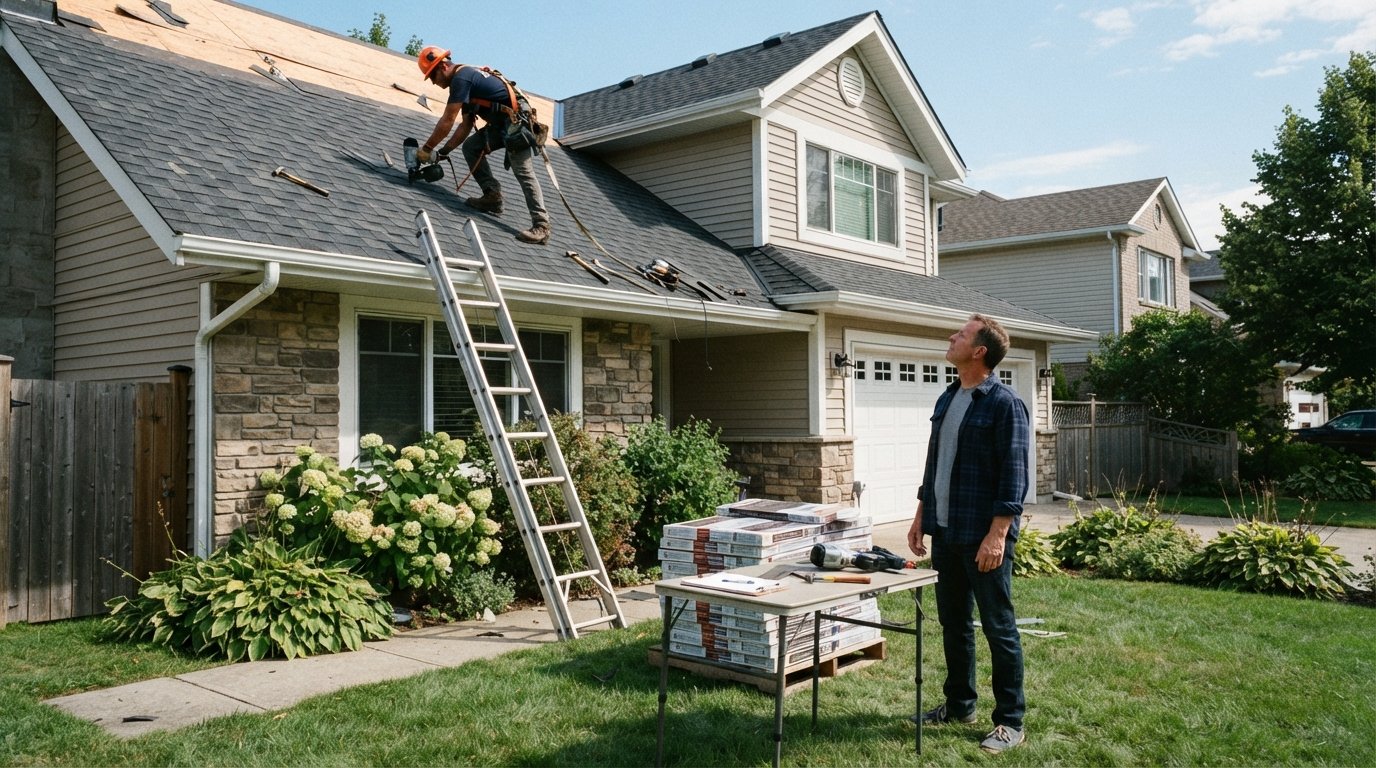
Do You Need a Permit for a Roofing Project? A Homeowner's Guide
Do you need a permit for a roofing project? Find out when permits are required and how to avoid fines, insurance denials, and sale delays. Call (833)-700-4293 for trusted local roofing pros.

Learn more about Roof Repair or Maintenance for guides, costs, and what to expect.
Compare Roof Repair or Maintenance Pros Near You

Enter your ZIP code to compare top-rated local professionals and request free quotes.
You have picked out shingles, scheduled the crew, and maybe even put down a deposit. Then a neighbor asks the one question that can stall everything: do you need a permit for a roofing project? The answer is not a simple yes or no. It depends on where you live, how much of the roof you are changing, and whether the work is structural or cosmetic. Getting this wrong can cost you thousands in fines, void your insurance, or create a nasty surprise when you sell your home. This guide walks you through the rules, the risks, and the smart way to handle permits so your roofing project stays on track.
Why Roofing Permits Exist and Who Enforces Them
Building codes are not there to make your life harder. They exist to protect you, your family, and future owners of your home. A roof is a critical structural and weatherproofing system. If it is installed incorrectly, you risk leaks, mold, structural damage, and even collapse under snow or wind. Permits create a paper trail that says a qualified inspector looked at the work and confirmed it meets minimum safety standards.
Permits are issued by your local building department, which could be a city, county, or township office. Each jurisdiction adopts its own version of the building code, and enforcement varies widely. Some cities require permits for almost any roof work beyond a minor patch. Others allow homeowners to replace up to a certain square footage without one. Rural areas might have no permit requirement at all, while strict urban markets might require permits even for small repairs. Because of this patchwork, there is no single national answer to the permit question.
The best first step is always the same: call your local building department and ask directly. Give them your address and a clear description of the work. They will tell you whether a permit is required, what the fee is, and what inspections are needed. This five-minute call can save you weeks of headaches later.
When a Roofing Project Requires a Permit
Most roofing projects that involve replacing the roof covering or altering the roof structure will require a permit. The scope of work matters more than the cost. A full tear-off and replacement almost always needs a permit, because the inspector wants to see the decking, underlayment, flashing, and ventilation details before they are covered up. Even a partial replacement that involves more than a tiny repair can trigger a permit requirement in many jurisdictions.
Structural changes are a near-certain permit trigger. If you are adding a dormer, changing the roof pitch, cutting new openings for skylights, or repairing damaged rafters, you will need a permit. These changes affect the load-bearing capacity of the roof and must be reviewed by a structural plan checker. Cosmetic changes, like swapping one type of shingle for another with similar weight, sometimes fall under a simpler permit or no permit at all, but you must confirm with your local office.
Here are the most common scenarios that require a roofing permit:
- Full roof replacement (tear-off and new installation)
- Partial replacement over a certain square footage (varies by jurisdiction)
- Structural repairs to rafters, trusses, or sheathing
- Installation of skylights or roof windows
- Changing the roof pitch or adding a dormer
- Installing a new roof-mounted HVAC unit or solar array
Even if your project seems minor, never assume it is exempt. A roofing contractor who is experienced in your area will know the local rules. If you are still comparing pros, a good place to start is a service that connects you with pre-vetted local roofing contractors who handle permits as part of the job. You can also check our guide on window replacement permits for a parallel look at how permit rules apply to another exterior project.
How Local Rules Vary for Structural Versus Cosmetic Changes
The line between structural and cosmetic work is not always obvious to a homeowner. A roofer might call a repair cosmetic because it involves replacing a few shingles, but if those shingles sit over damaged decking, the job becomes structural. Local building departments often define these terms in their permit guides. For example, one city might require a permit for any work that disturbs the roof sheathing, while another might only require a permit if more than 100 square feet of roofing is replaced.
Cosmetic changes, such as repainting a metal roof or applying a reflective coating, rarely require a permit. But replacing asphalt shingles with a heavier tile or slate can raise structural concerns because of the added weight. In those cases, even a like-for-like replacement might need an engineering review. The key is to ask your contractor to describe the work in detail and then confirm with the building department whether that description triggers a permit.
Another variation is how inspections are handled. Some jurisdictions require a pre-inspection before work begins, a mid-project inspection after the underlayment is installed, and a final inspection when the roof is complete. Others only require a final inspection. Knowing the inspection schedule helps you plan the project timeline and avoid delays. If your contractor is responsible for pulling the permit, they should also be responsible for scheduling inspections. Make sure this is clear in your contract.
What a Roofing Inspection Covers and How to Prepare
A roofing inspection is not the same as a home inspection. A building inspector focuses on code compliance. They will check that the roof structure is sound, that the materials meet local code, that flashing and waterproofing are installed correctly, and that ventilation is adequate. They may also verify that the work matches the approved plans and that safety requirements were followed.
To prepare for an inspection, you and your contractor should have the permit and approved plans on site. The work area should be accessible. If the inspector needs to see the decking or underlayment, those layers should not be covered yet. Your contractor should know the inspection checklist in advance and schedule the inspection at the right stage. Homeowners can help by keeping pets secured, clearing access to the attic if needed, and being available to answer questions.
After the inspection, the inspector will either approve the work, approve with conditions, or require corrections. If corrections are needed, your contractor must make them and schedule a re-inspection. Do not make the final payment until the inspection is passed and the permit is closed. A closed permit is your proof that the work was done to code.
Consequences of Skipping Permits on Insurance and Sale
Skipping a required permit might save you a few hundred dollars upfront, but the long-term risks are far greater. The most immediate risk is financial: if you are caught with unpermitted work, you may face fines, stop-work orders, and the cost of tearing out and redoing the work to code. Some jurisdictions can require you to remove a roof that was installed without a permit, which means paying twice for the same job.
Insurance is another major concern. Homeowners insurance policies typically require that work be done to code and with proper permits. If a storm damages your roof and the insurer discovers the roof was installed without a permit, they may deny the claim or reduce the payout. That leaves you responsible for thousands of dollars in repairs. In some cases, an unpermitted roof can even void your policy entirely, leaving your home unprotected.
When you sell your home, a buyer's inspector will likely check for permits on major work. An unpermitted roof can delay the sale, lower your asking price, or kill the deal. Buyers are wary of inheriting code violations, and lenders may refuse to finance a home with unpermitted structural work. If you have already done the work without a permit, you may be able to retroactively apply for one, but the process can be expensive and stressful. It is always cheaper and easier to get the permit before work begins.
To avoid these problems, work with contractors who understand local permitting and are willing to handle the paperwork. A marketplace like FreeQuotes.Contractors connects you with pre-vetted local roofing pros who can guide you through the permit process and provide competitive quotes. Getting multiple quotes also helps you compare whether permit costs are included or added separately.
How to Verify Permit Requirements and Work with Your Contractor
The permit process itself is usually straightforward, but it requires diligence. Start by calling your local building department or checking their website. Many departments have online portals where you can search permit requirements by project type. When you call, ask specific questions: Does a full roof replacement require a permit? What about a repair of less than 100 square feet? What inspections are required? How long does approval take? What is the fee? Write down the answers and keep them with your project records.
Next, discuss permits with your contractor before signing a contract. A reputable contractor will expect to pull the permit and will include the cost in the bid. Be wary of any contractor who suggests skipping the permit to save money or who asks you to pull the permit as the homeowner. In most cases, the contractor should be the one to obtain the permit because they are responsible for the work. If you pull the permit as a homeowner, you may be taking on liability for code compliance.
Here are the steps to handle permits smoothly:
- Call your local building department to confirm requirements for your specific project.
- Ask your contractor whether the bid includes permit fees and inspection coordination.
- Verify that the contractor is licensed and insured, and check references for similar projects.
- Review the contract to ensure permit responsibility and inspection scheduling are clearly stated.
- Keep copies of the permit, inspection reports, and final approval for your records.
Following these steps protects you legally and financially. It also gives you peace of mind that the roof over your head was installed correctly.
Special Cases: Emergency Repairs, Solar, and Historic Homes
Emergency repairs after a storm can complicate the permit question. If your roof is leaking and you need temporary repairs to prevent further damage, many jurisdictions allow emergency work without a permit, provided you apply for a permit within a certain number of days. The key is to document the damage with photos and keep receipts. Permanent repairs will still require a permit. Always check with your local building department before assuming an emergency exemption applies.
Solar installations add another layer. A solar array adds weight to your roof and requires penetrations for mounting. Most jurisdictions require a permit for solar, and the permit may cover both the structural attachment and the electrical work. If you are planning solar, coordinate with your roofer and solar installer to ensure the roof is in good condition before panels go up. Replacing a roof after solar installation is much more expensive because the panels must be removed and reinstalled.
Historic homes may have additional requirements. If your home is in a historic district, you may need approval from a preservation commission in addition to a building permit. The commission may review the color, material, and style of the new roof to ensure it matches the historic character. This process can add time to your project, so plan accordingly. Your contractor should have experience with historic properties and know how to navigate these reviews.
No matter the special case, the safest approach is to ask before you build. A quick call to your local building department or a conversation with a knowledgeable contractor can clarify the rules for your specific situation. When in doubt, get the permit. The cost and time are minor compared to the risks of skipping it.
Your roof is one of the most important investments in your home. Protecting that investment means following the rules, hiring qualified professionals, and keeping good records. With the right information and the right team, you can navigate the permit process confidently and enjoy a safe, durable roof for years to come.