
Common Plumbing Problems Homeowners Can Diagnose Themselves
Diagnose common plumbing problems homeowners can diagnose themselves and avoid surprise bills. Call (833)-700-4293 for expert help today.

By Gabriel Hayes
Learn more about Emergency Plumbing for guides, costs, and what to expect.
Compare Emergency Plumbing Pros Near You

Enter your ZIP code to compare top-rated local professionals and request free quotes.
You turn on the kitchen faucet and the water trickles out. Or you notice a faint hissing sound from the toilet tank that never seems to stop. Or the shower drain has started pooling water around your feet. These are the moments when most homeowners reach for the phone, but many common plumbing problems can be diagnosed yourself before you ever call a professional. Understanding the symptoms, performing a few safe checks, and knowing when a fix is truly beyond your skill level can save you money, prevent unnecessary damage, and help you communicate clearly with a plumber when you do need one.
This guide walks through the most frequent household plumbing complaints, the simple diagnostic steps you can take with basic tools (or no tools at all), and the warning signs that mean you should stop and call a licensed professional. Along the way, you will learn what information to gather so that when you do reach out for help, the repair goes faster and costs less. For homeowners who prefer to compare local plumbing professionals after a diagnosis, services like FreeQuotes.Contractors can connect you with pre-vetted plumbers in your area.
Start With the Symptoms: What Your Plumbing Is Telling You
Plumbing problems rarely appear without warning. A running toilet, a slow drain, or a sudden drop in water pressure are all symptoms that point to specific underlying causes. The first step in any self-diagnosis is to observe carefully and note exactly what is happening, where it is happening, and when it started. This information alone can narrow the list of possible causes dramatically.
For example, a toilet that runs continuously usually means the flapper valve is not sealing properly or the fill valve is malfunctioning. A drain that is slow in one sink but fine elsewhere suggests a localized clog, while slow drains throughout the house point to a main line issue. Low water pressure at a single fixture often indicates a clogged aerator or a failing valve, but low pressure everywhere could signal a problem with the main water supply line or a pressure regulator. Paying attention to these patterns is the foundation of effective homeowner diagnosis.
Keep a simple log for a few days if the problem is intermittent. Note the time of day, which fixtures are affected, and whether any recent activity (a heavy rain, a garbage disposal use, a load of laundry) preceded the issue. This record will be invaluable whether you fix the problem yourself or hand it off to a professional.
Safe Checks You Can Perform Without Special Tools
Before you consider calling a plumber, there are several safe and straightforward checks you can perform using items you likely already have at home. These checks are designed to confirm or rule out common causes without risking damage to your plumbing system or your home. Always remember that safety comes first: never open walls, disconnect gas lines, or work on electrical components connected to plumbing without proper training.
Here are the core diagnostic steps for the most common complaints:
- Running toilet: Remove the tank lid and check the flapper. If water continues to flow into the bowl after a flush, the flapper is likely worn. You can also add a few drops of food coloring to the tank and wait 15 minutes; if color appears in the bowl without flushing, the flapper is leaking.
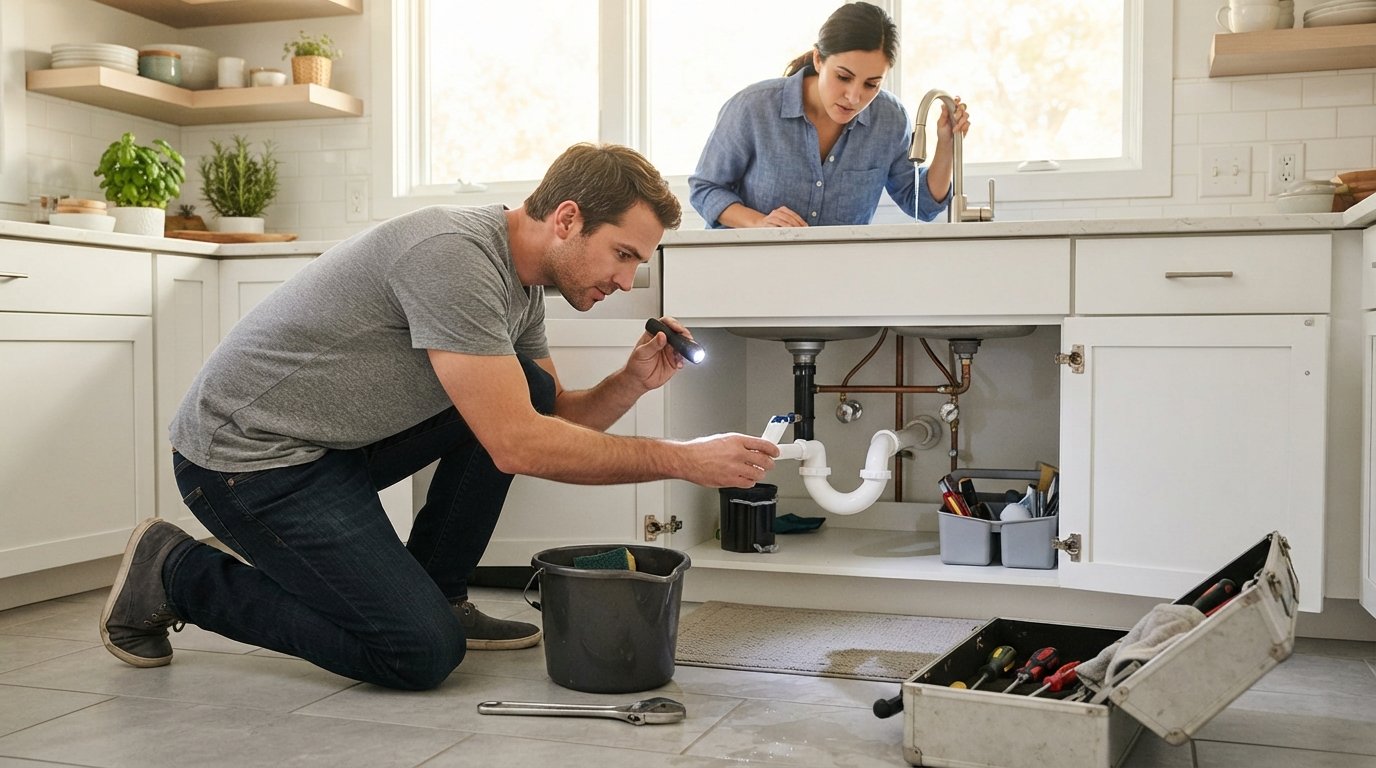
- Slow drain: Remove the drain stopper and clean out any hair or debris. For kitchen sinks, check the P-trap under the sink for blockages (place a bucket underneath first). Avoid chemical drain cleaners, which can damage pipes over time.
- Low water pressure: Unscrew the aerator from the faucet and rinse it. Mineral buildup is a common cause. For showerheads, remove and soak in vinegar overnight. If pressure is low throughout the house, check the main shutoff valve to ensure it is fully open.
- Visible leak under sink: Dry the area thoroughly, then run water and watch for drips. Tighten any loose compression fittings by hand or with a wrench, but do not overtighten. If the leak persists, note the exact location.
- Garbage disposal hums but does not drain: Turn off the power at the breaker, then use the hex wrench that came with the disposal to manually turn the flywheel. Never put your hand inside the disposal.
These checks take only a few minutes and can often resolve the issue outright or provide enough information to decide on the next step. For instance, a running toilet fixed with a new flapper costs a few dollars and saves hundreds of gallons of water per month. A slow drain cleared of hair may restore full flow immediately. But if these simple steps do not solve the problem, or if you notice water where it should not be, it is time to dig deeper or call a professional.
When Symptoms Point to a Hidden Leak or Sewer Problem
Some plumbing issues are not visible at the fixture level. A hidden leak behind a wall or under a slab can cause significant damage before it becomes obvious, and sewer line problems can affect the entire household. Knowing the warning signs of these more serious issues is critical for every homeowner.
Watch for these red flags that suggest a hidden leak or sewer issue:
- Unexplained increases in your water bill without a change in usage habits.
- Musty or earthy odors in the basement, crawl space, or around the foundation.
- Warm spots on the floor (indicating a hot water pipe leak under a slab).
- Multiple slow drains or gurgling sounds from toilets and drains when appliances run.
- Sewage backups or water pooling around floor drains.
- Cracks in the foundation or unexplained mold growth on walls.
If you suspect a hidden leak, you can perform a simple meter test. Turn off all water fixtures and appliances, then check your water meter. If the meter continues to run, water is escaping somewhere in the system. This test confirms a leak exists but does not locate it; a professional plumber will use specialized equipment to find the source without unnecessary demolition. Similarly, if you notice a sewer smell or multiple drains backing up, the problem likely lies in the main sewer line, which requires professional inspection and repair.
These situations are beyond the scope of homeowner diagnosis and repair. Attempting to address a hidden leak or sewer line issue yourself can lead to extensive water damage, mold growth, or even structural failure. The cost of a professional repair is almost always far less than the cost of fixing the aftermath of a failed DIY attempt.
When a DIY Fix Risks Making Damage Worse
While many minor plumbing problems are well within the capabilities of a careful homeowner, certain situations carry a high risk of causing more harm than good. Recognizing these boundaries is just as important as knowing how to diagnose a running toilet. The following scenarios are clear signals to stop and call a licensed plumber.
First, any issue involving the main water shutoff valve or the water heater should be handled by a professional. A stuck main valve can break if forced, leading to a flood. Water heaters involve both water and electricity or gas, and improper repairs can cause leaks, electrical hazards, or carbon monoxide risks. Second, any leak that is not visible or that originates inside a wall or under the floor requires professional detection and repair. Opening a wall to find a leak without proper knowledge can result in structural damage and costly repairs. Third, sewer line problems, including backups and blockages, should always be addressed by a professional with the right equipment to clear the line safely without damaging pipes or contaminating your home.
Finally, if you have attempted a simple fix and the problem persists or worsens, stop. Continuing to tighten a fitting that will not seal or repeatedly plunging a drain that will not clear can cause pipes to crack or joints to fail. A plumber can diagnose the underlying issue quickly and recommend the correct solution, often at a lower cost than repairing the damage from a failed DIY attempt.
What to Describe to a Plumber to Speed Up the Repair
When you decide to call a plumber, the information you provide can significantly affect how quickly and accurately the repair is completed. A well-prepared description helps the plumber arrive with the right tools and parts, reducing the time spent on diagnosis and minimizing the overall cost. Before making the call, gather the following details:
- Location of the problem: which fixture, which room, and whether it affects one area or the whole house.
- Symptoms and timing: when the issue started, whether it is constant or intermittent, and any patterns you noticed.
- What you have already tried: any checks or fixes you performed and their results.
- Visible signs: leaks, water stains, mold, odors, or unusual noises, with photos if possible.
- Access information: whether the shutoff valve works, whether the problem area is easily accessible, and any relevant history of previous repairs.
With this information, a plumber can often give you a more accurate estimate over the phone and arrive prepared to solve the problem efficiently. If you are unsure which local professional to contact, a service like FreeQuotes.Contractors can connect you with pre-vetted plumbers in your area and provide free quotes for comparison. This approach saves you the time of searching and vetting multiple contractors on your own.
In many cases, the diagnosis you perform as a homeowner is the first step toward a successful repair. Whether you fix a running toilet yourself or hand off a sewer line issue to a professional, understanding what is happening and why empowers you to make better decisions and avoid unnecessary costs.